make preferable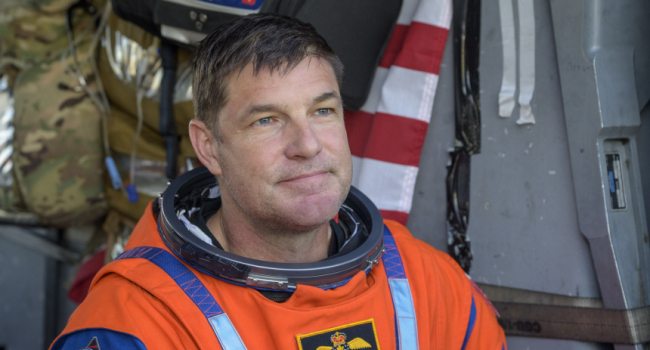
Less than a week after the successful splashdown of the crew from Artemis 2, the astronauts have already returned to work and are actively helping NASA prepare for the next stages of the program. Mission commander Reid Wiseman expressed confidence that landing humans on the Moon is not science fiction but a realistic goal for the coming years.
We Were Ready to Land on the Moon
During a press conference on April 16, Reid Wiseman, Victor Glover, Christina Koch, and Jeremy Hansen shared their impressions of the flight and described how well the Orion spacecraft performed under real deep-space conditions.
Wiseman stated that if the crew had been given access to a lunar lander, they would have descended and landed on the Moon, adding that the team felt ready for landing even during this test flight.
He explained that the Orion spacecraft performed exceptionally well. What surprised him most about the mission, he said, was how reliably the spacecraft operated and how effectively it supported four people on board.
The astronauts reported only a few minor issues—for example, the cabin temperature during the first days was slightly lower than expected—but ground teams resolved these quickly. Wiseman emphasized that Orion spacecraft is already capable of supporting longer missions. He noted that, in his view, the spacecraft intended for Artemis 3 could be placed on the Space Launch System (SLS) rocket and launched immediately, with the crew fully prepared.
Preparing for Artemis 3 and 4
Artemis 2 became the first crewed mission of the Artemis Program and the first human expedition to the vicinity of the Moon in more than 50 years. Attention is now focused on the next steps.
Artemis 3, scheduled for mid-2027, is expected to rehearse docking the Orion spacecraft with one or both lunar landing systems in Earth orbit: Starship developed by SpaceX and Blue Moon from Blue Origin.
If those steps proceed successfully, Artemis 4, planned for late 2028, is expected to carry out the first astronaut landing on the Moon’s surface near the Lunar South Pole.
Glover emphasized the importance of continuing test flights, noting that it remains essential to practice these procedures because engineers are still making adjustments and learning how to support 30- and 45-day missions planned for Artemis 3, Artemis 4, and Artemis 5.
Crew Outlook and Future Plans
The astronauts returned to Earth motivated and determined to continue their work. Wiseman said that the mission helped unite people around the world and demonstrated what humanity is capable of achieving.
He explained that the team set out with the intention of attempting something that could bring the world together.
At the same time, the mission commander acknowledged the technical challenges ahead, stating that the upcoming landing will be extremely complex but that the team approaches its work each day with the understanding that the goal is entirely achievable and likely to be realized soon.
In Brief
The commander of Artemis 2, Reid Wiseman, stated that landing astronauts on the Moon is absolutely realistic and could happen in the near future. After a successful lunar flyby and return to Earth on April 10, the crew highlighted the strong performance of the Orion spacecraft and its readiness for more demanding missions. The next stage will be Artemis 3 in 2027, which will rehearse docking operations in Earth orbit, followed by Artemis 4 in late 2028, which is expected to carry out the first landing near the Lunar South Pole. The astronauts believe that the path back to the Moon is now open and that humanity is returning with the intention of staying.