make preferable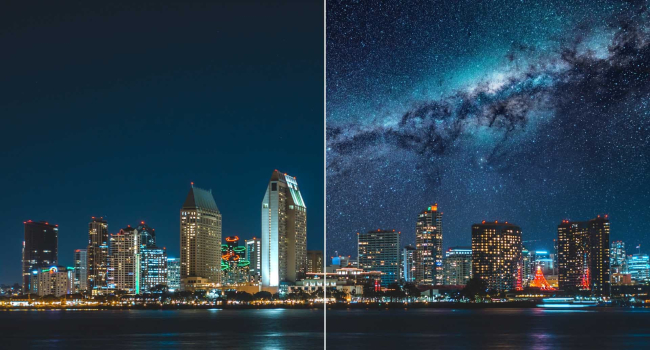
Earth is becoming brighter at night. A new international study based on satellite observations has shown that artificial lighting made the planet 16% brighter between 2014 and 2022. At the same time, some regions are showing the opposite trend, according to Space.com.
Global Brightening and Local Dimming
Scientists analyzed the data using NASA’s Black Marble tool, which processes measurements from the VIIRS radiometer installed on the Suomi NPP and NOAA-20 satellites. The results proved to be mixed.
Overall, Earth continues to glow more brightly at night, especially in developing countries such as India, China, and several African nations. At the same time, the area of territories where nighttime lighting is decreasing is also growing.
The study’s lead author, Zhe Zhu, Associate Professor in the Department of Remote Sensing at the University of Connecticut, explained that Earth is not gradually becoming brighter but rather flickering. He added that brightness is mainly increasing in developing countries, while areas of dimming are also expanding each year.
A striking example was the sharp decline in nighttime lighting in Ukraine after the start of Russia’s full-scale invasion in February 2022. In France, where energy-saving measures are being widely implemented, nighttime lighting has decreased by an impressive 33%.
What the Satellite Data May Be Missing
Scientists note an important limitation: the VIIRS satellite sensors are not very sensitive to blue light, which is emitted by modern LED lamps. This means that the actual increase in nighttime brightness could be even greater than satellite data indicate. Confirmation of this came from another study published in 2023: according to data from more than 50,000 observers worldwide, the visible brightness of the night sky in populated areas is increasing by nearly 10% per year.
Consequences of Light Pollution
Constant artificial lighting is already having a significant impact on human health, animals, and plants. It disrupts circadian rhythms, worsens sleep quality, and interferes with the navigation of migratory birds and insects. For astronomers and stargazing enthusiasts, it means the gradual disappearance of stars even in relatively dark locations.
At the same time, Zhe Zhu emphasized that increasing brightness in poorer regions of Africa and Asia often has a positive meaning. He explained that from an economic perspective, brightness can be a good sign, indicating increased activity and access to electricity in places where it was previously unavailable.
In Brief
Over eight years—from 2014 to 2022—artificial lighting made Earth 16% brighter at night, according to NASA satellite data. The increase in illumination is especially noticeable in developing countries, while regions affected by wars and natural disasters, as well as countries with effective energy-saving policies—such as France—are experiencing reductions in nighttime lighting. Satellite measurements may underestimate the real growth in brightness because of their limited sensitivity to blue light from LED lamps. Light pollution remains a serious problem for human health, ecosystems, and astronomical observations. The study was published in the journal Nature.