make preferable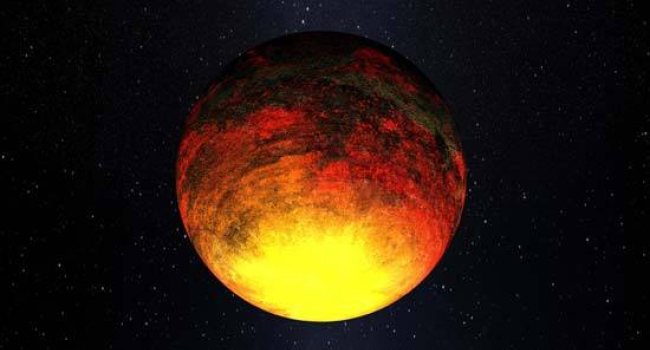
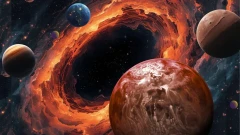
Beyond the Solar System lies a vast number of worlds, many of which resemble scenes from science fiction rather than familiar planets. According to Evgeny Burmistrov from Perm Polytechnic University, more than 5,500 exoplanets have already been discovered, and their number continues to grow rapidly.
How Planets Around Other Stars Are Found
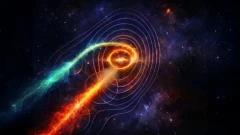
Direct observation of exoplanets is extremely difficult because they are much dimmer than their parent stars. For this reason, astronomers use indirect methods: they record periodic drops in a star’s brightness when a planet passes across its disk — known as the transit method — or measure small stellar wobbles caused by the gravitational pull of an orbiting planet.
Combining these methods allows scientists to determine the size, mass, and even the approximate chemical composition of distant worlds.
Worlds That Look Like Science Fiction
The discovered exoplanets turned out to be far more diverse than scientists had expected just a few decades ago. Among them are:
- “Hot Jupiters” — gas giants orbiting extremely close to their stars;
- “Super-Earths” — planets more massive than Earth but smaller than gas giants.
Some worlds display truly extreme conditions.
On the planet HD 189733 b, surface temperatures reach about 1,000 °C, while winds accelerate to 8,000 km/h. Silicate particles form in its atmosphere, producing real glass rains that fall almost horizontally due to the tremendous wind speeds.
The planet 55 Cancri e is even hotter — its surface is thought to be an ocean of molten lava with temperatures up to 2,400 °C. Scientists suggest that deep within this planet, carbon may transform into diamonds under enormous pressure.
Planets That Are Slowly Disappearing
Some exoplanets orbit so close to their stars that they gradually break apart. A striking example is WASP-12b. Its atmosphere is constantly stripped away by stellar wind and gravity, forming a vast cloud of gas and dust around the star. The planet is literally evaporating before astronomers’ eyes.
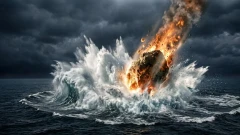
An even more unusual world is K2-141b. Here, temperatures on the daytime side reach about 3,000 °C, causing rock to vaporize, get carried by atmospheric currents to the night side, and fall there as stone rain, creating a closed geological cycle.
Planets That Seem Taken from Movies
The planet Kepler-16b orbits two stars at once — a real-life version of Tatooine from the Star Wars universe.
The world GJ 1214 b is believed to be entirely covered by a global ocean hundreds of kilometers deep. Due to enormous pressure, water there may exist in unusual ultra-dense phases unlike anything found on Earth.
What Comes Next
Modern telescopes such as the James Webb Space Telescope already make it possible not only to detect exoplanets but also to study the composition of their atmospheres. Scientists are discovering water vapor, methane, carbon dioxide, and other molecules in them.
Nevertheless, many fundamental questions remain unanswered. How do such diverse planetary systems form? How often do habitable worlds arise in the Universe? The nearest exoplanets lie at distances that current spacecraft would take hundreds of thousands of years to cross, so for now all research is conducted remotely.
In Brief
Astronomers have discovered more than 5,500 exoplanets, many of which stretch the imagination. On HD 189733 b, horizontal glass rains fall; on 55 Cancri e, the surface is an ocean of lava; and on K2-141b, rocks evaporate and fall as stone rain on the night side. Some planets, such as WASP-12b, are slowly breaking apart and evaporating into space. There are worlds resembling Tatooine and planets completely covered by ultra-deep oceans. Modern science is only beginning to understand how diverse and extreme the Universe beyond our Solar System can be.