make preferable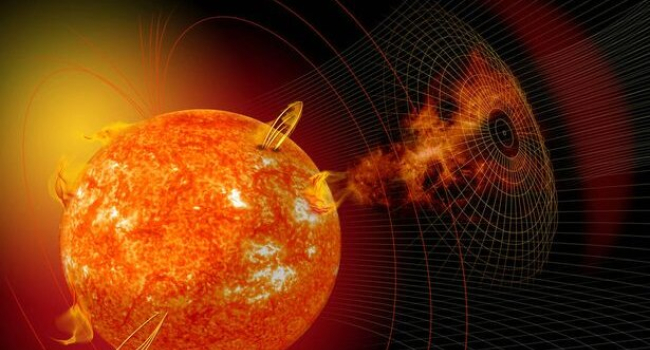
Scientists and space weather specialists are increasingly emphasizing the need to prepare for extreme events on the Sun. A new technical report by the UK Science and Technology Facilities Council (STFC), published in January 2026, describes the potential consequences of a “worst-case scenario”—a powerful solar storm similar to those that occur once every 100–200 years.
What the “Worst-Case Scenario” Means
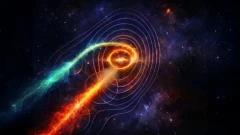
The authors of the report stress that this scenario does not refer to events that might happen once in a million years, but to a realistically possible extreme solar storm that humanity could experience within this century. Such a scenario includes powerful solar flares, coronal mass ejections, and the resulting geomagnetic storms.
Threat to Power Systems
During strong geomagnetic storms, additional induced currents arise in power transmission lines. If these currents exceed the capacity of protective systems, they can lead to widespread power outages. In addition, such currents cause premature aging and damage to transformers, reducing the reliability of power systems for months or even years after the event.
Satellites Under Threat
Orbital infrastructure would be among the most vulnerable targets. Charged particles can damage satellite electronics and accelerate the degradation of solar panels, shortening their service life by several years. In the most severe cases, some spacecraft could fail completely.
Another dangerous effect involves the heating of the upper atmosphere by solar X-rays. The atmosphere expands, increasing drag on satellites. This leads to orbital decay and, in extreme cases, uncontrolled reentry and burning up in the atmosphere. A similar situation occurred in 2022, when dozens of Starlink satellites were lost following relatively moderate solar activity.
Failure of Communication and Navigation Systems
Solar flares generate powerful radio waves that can interfere with radio signals on Earth. Systems that rely on weak signals are especially vulnerable, including satellite navigation (GPS), radar systems, and communication with aircraft and maritime vessels.
During geomagnetic storms, instability in the ionosphere leads to significant disruptions in satellite navigation and long-distance radio communication lasting several days. This could disrupt aviation, maritime transport, and many ground-based services that depend on precise positioning.
In addition, radiation risks increase for aircraft crews, especially at high latitudes. In extreme cases, pregnant crew members and other vulnerable groups might need to limit flights.
Encouraging News Despite the Risks
Despite the seriousness of the potential consequences, the authors of the report emphasize that humanity’s ability to observe the Sun and forecast space weather has improved significantly. Modern monitoring systems provide more time to prepare for strong events.
In Brief
A new report by the UK Science and Technology Facilities Council describes the consequences of a powerful solar storm that may occur once every 100–200 years. Such a storm could cause widespread power outages, transformer damage, satellite failures, disruptions to GPS and long-distance radio communication, and increased radiation risks for aviation. Power grids, satellite infrastructure, and navigation systems would be particularly vulnerable. Although the consequences cannot be completely avoided, improvements in space weather forecasting provide more time for preparation and damage mitigation. Modern society relies heavily on technologies sensitive to space weather, making the protection of critical infrastructure an increasingly urgent issue.