make preferable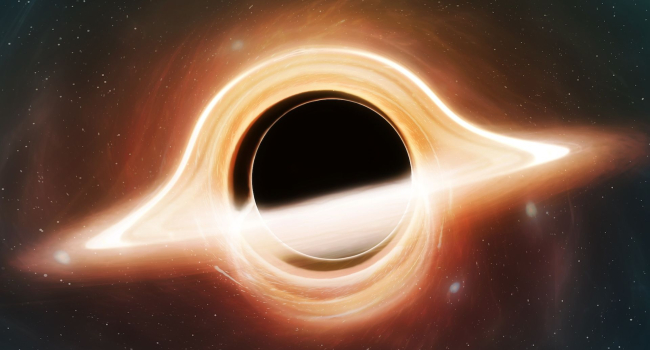
The most massive supermassive black holes in the Universe, which once grew at incredible speeds, have dramatically slowed their growth over the past 10 billion years. A new study offers an explanation for this long-standing astrophysical mystery: they may simply be running out of “food.”
The Mystery of Cosmic Noon
Supermassive black holes with masses of millions and billions of times that of the Sun formed surprisingly quickly during the first few billion years after the Big Bang. However, beginning with the period astronomers call cosmic noon — when the Universe was about 2–3 billion years old — their growth noticeably slowed. For a long time, it remained unclear why the Universe’s most “voracious” objects suddenly began to experience a shortage of gas, their primary fuel source.
A new study conducted by scientists from Vrije Universiteit Brussel and Massachusetts Institute of Technology proposes a possible answer to this question.
Main Hypothesis: A Shortage of Gas
An analysis of data from approximately 8,000 supermassive black holes showed that in the later Universe, these objects indeed lack sufficient matter for active growth. In the past, these cosmic giants consumed surrounding gas at high rates, forming bright quasars. Today, most of them have entered a “dormant” state, and their accretion disks have become significantly depleted of material.
Scientists note that this slowdown began precisely after cosmic noon — the period of maximum star formation activity in the Universe. According to one explanation, much of the available gas had already been used to form stars or dispersed by various processes.
Alternative Hypothesis: The Role of Primordial Black Holes
Researchers are also considering a more exotic possibility. According to this hypothesis, primordial black holes may have played an important role in the early history of the Universe. These hypothetical objects could have formed in the very first moments after the Big Bang from extremely dense regions of plasma.
Unlike ordinary black holes that form when massive stars explode, primordial black holes could have had a wide range of masses — from microscopic to very large. Their explosions and evaporation in the early Universe may have influenced how matter was distributed and, indirectly, how much gas remained available for supermassive black holes in later epochs.
What This Means
If this hypothesis is confirmed, it will help scientists better understand not only the evolution of supermassive black holes but also the broader history of how structure formed in the Universe. For now, researchers continue to collect data to determine whether the slowdown is truly due to a simple shortage of “food” or to more complex processes that took place in the early Universe.
In Brief
The most massive black holes in the Universe sharply slowed their growth about 10 billion years ago. A study of nearly 8,000 objects suggests that the main cause is a shortage of gas, which serves as their “food.” After the epoch known as cosmic noon, significantly less material remained available for active accretion. Scientists are also exploring the possibility that explosions of primordial (microscopic) black holes formed in the earliest moments after the Big Bang influenced the distribution of matter. The mystery of why the Universe’s most “voracious” objects slowed their growth remains an active area of research.