make preferable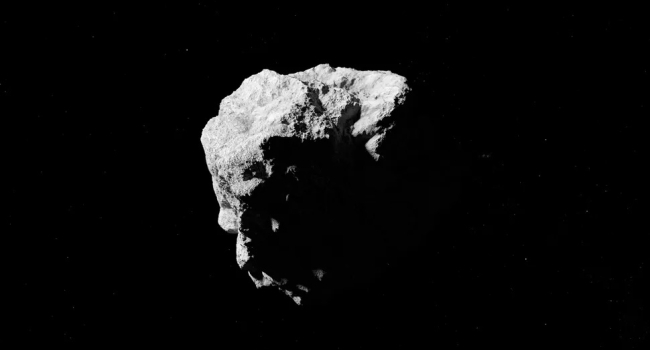
Today the asteroid 2026 GD — a celestial object about the size of a small house — will fly past Earth. Although the object is listed as potentially hazardous by the European Space Agency, it poses no threat to Earth, the Moon, or the Artemis 2 crew, Space.com reports.
When and How Close the Asteroid Will Pass
The asteroid was discovered just three days ago, on April 6. Its estimated diameter is about 16 meters (54 feet).
Its closest approach to Earth will occur at 18:59 Eastern Time (22:59 GMT). At that moment, the asteroid will pass at a distance of 250,000 km from our planet — about 0.65 of the distance to the Moon.
The object will be traveling at a speed of 45,109 km/h (28,030 mph).
A few hours later, at 20:12 Eastern Time (00:12 GMT on April 10), the asteroid will pass even closer to the Moon — at a distance of 163,750 km from its surface. Despite this, there is no danger to Earth, the Moon, or the Artemis 2 crew, who are currently returning home.
Why the Asteroid Was Added to the “Risk List”
2026 GD has been included in the Risk List maintained by the European Space Agency — a catalog of near-Earth objects that have at least a minimal probability of colliding with Earth in the future. However, this probability is extremely small: according to ESA calculations, the cumulative probability of collision between 2082 and 2124 is only 1 in 124,378.
After today’s flyby, the asteroid will continue along a highly elongated elliptical orbit lasting 644 days. It will travel far beyond the orbit of Mars before returning toward the Sun. The next planetary encounter will occur only in July 2031, when the object passes at a distance of 25 lunar distances from Venus.
What Happens Next
After the flyby, 2026 GD will continue its journey through the Solar System. Scientists will keep observing it in order to refine calculations of its orbit and predict its future behavior more accurately.
In Brief
This evening, the asteroid 2026 GD, about 16 meters in size, will pass Earth at a distance of 250,000 km. Later, it will pass even closer to the Moon. Despite being listed in ESA’s Risk List, the object poses no threat to Earth, the Moon, or the Artemis 2 crew. It is a relatively small but fast-moving asteroid that will move onto a 644-day orbit extending beyond Mars. Its next encounter with a planet will occur in 2031, when it passes near Venus.