make preferable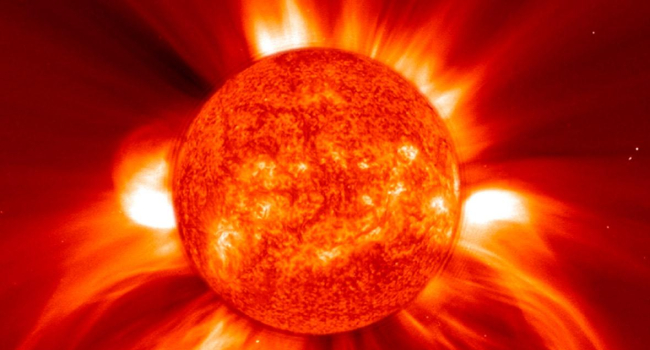
On April 9, 2026, at 12:47 Yerevan time (11:47 Moscow time), an M1.0-class solar flare was recorded on the Sun. This was reported by the Institute of Applied Geophysics (FGBU “IPG”).
What Happened
The medium-strength flare (M-class) occurred in the X-ray range. Although it does not belong to the strongest category (X-class), such events can cause short-term disruptions to radio communications and affect the upper layers of Earth’s atmosphere.
Current Situation on the Sun
Against the backdrop of this flare, overall solar activity remains moderate. Over the past 24 hours, several weak flares have been observed, but they did not develop significantly. Background solar activity continues to decline gradually and has already returned to levels seen in 2022.
What to Expect in the Coming Days
It should be recalled that a coronal hole had previously formed on the Sun, and its influence on Earth is forecast to begin around midday on April 10. Specialists from the Space Research Institute of the Russian Academy of Sciences and the Institute of Solar-Terrestrial Physics of the Siberian Branch of the Russian Academy of Sciences expect the effect to be relatively weak and short-lived.
A coronal hole is a region with reduced plasma density and temperature through which the solar wind escapes into space at increased speed. When it reaches Earth, it can cause minor geomagnetic disturbances.
Comparison with the Previous Storm
At the end of March 2026, Earth experienced one of the strongest magnetic storms of the past decade — at the G3 level. It came close to the maximum G5 level. The cause at that time was a major solar flare accompanied by the ejection of plasma and a medium-sized solar prominence.
What to Expect on April 10
According to current forecasts, any magnetic storm that may occur under the influence of the coronal hole is expected to be weak. Serious problems for technology or for the health of most people are not expected. However, weather-sensitive individuals may experience mild discomfort. At high latitudes, weak auroras may be visible under favorable conditions.
In Brief
On April 9, an M1.0-class solar flare occurred on the Sun. Solar activity remains moderate for now, but tomorrow, April 10, the effects of a coronal hole are expected, which may cause weak geomagnetic disturbances. Unlike the powerful G3-level storm at the end of March, this event is forecast to be minor and short-lived. Solar activity continues to decline gradually.