make preferable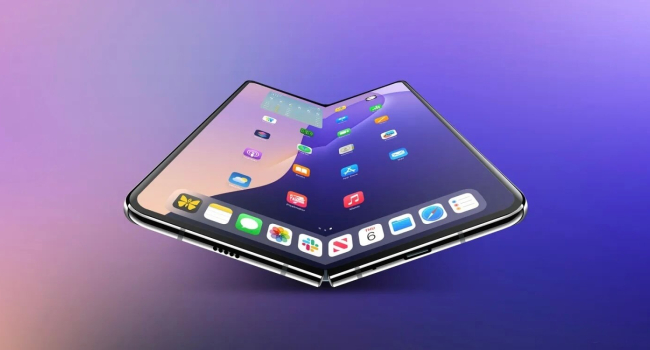
Apple traditionally enters new markets late but with revolutionary ideas. Its debut foldable smartphone, expected in the fall of 2026 alongside the iPhone 18 Pro lineup, is set to become a benchmark for the format. According to a JP Morgan report and insights from Ming-Chi Kuo, the device will introduce three key innovations that address the main weaknesses of existing foldables. MacRumors has compiled the latest leaks: from a record-resolution under-display camera to an almost invisible crease. Here is why these features may reshape the market.
Under-Display Camera: 24 MP and No More Cutouts
One of the biggest disappointments in foldable Android smartphones is the low-quality front camera on the inner screen. These are typically 4 to 8 MP sensors with a visible cutout or soft, blurry image. Apple is reportedly ready for a breakthrough: according to JP Morgan, the under-display camera in the iPhone Fold will have a 24 MP resolution, three times higher than competitors. This is made possible through innovations in light transmission, using six plastic lenses and an improved sensor that delivers image clarity close to standard iPhone selfie cameras.
The camera will be integrated directly into a 7.8-inch LTPO OLED inner display with a 120 Hz refresh rate without sacrificing screen area. For comparison, the Samsung Galaxy Z Fold7 and Google Pixel 10 Pro Fold use 4 MP under-display cameras that suffer in low light. Apple has clearly been refining this technology for years, and it may become a major selling point for photography enthusiasts waiting for a foldable device with no compromises.
A Crease-Free Display: Solving the Biggest Foldable Problem
The display crease is the Achilles heel of all foldables, from the Galaxy Z Fold series to the Honor Magic V3. It is noticeable while scrolling and deepens over time. According to a report by China’s UDN, Apple has become the first manufacturer to achieve an almost completely invisible crease. The key lies in its construction: a titanium alloy frame paired with a hinge made of liquid metal, which evenly distributes stress. Suppliers such as Fine M-Tec are already preparing laser-cut metal plates for the display to minimize deformation.
The outer display will be a 5.5-inch OLED, similar to classic iPhones, to maintain compactness when folded. This is not just cosmetic—removing the crease improves display durability and visual comfort, making the device feel like a standard iPhone but with tablet-like versatility. Samsung is already approaching this with the Z Fold7, but leaks suggest Apple is overtaking its competitors.
A 5400–5800 mAh Battery: Record-Breaking Endurance
Foldable devices usually sacrifice battery capacity due to their slim design: the Galaxy Z Fold7 has 4400 mAh, while the Pixel Fold has 4821 mAh. The iPhone Fold, according to Ming-Chi Kuo and Korean sources, will use high-density battery cells with a capacity of 5400 to 5800 mAh — 30 to 40 percent more than the iPhone 17 Pro Max (5088 mAh). Chinese insider Instant Digital confirms that the final capacity will “definitely” exceed 5000 mAh, making it the largest battery ever in an iPhone.
A dual-cell system distributes power across both displays, while display driver optimization (from 28 nm to 16 nm) reduces consumption. Combined with the A20 Pro chip (2 nm) and 12 GB of RAM, the device is expected to deliver 12 to 14 hours of screen time in mixed use. For comparison, the vivo X Fold5 with 6000 mAh leads the Android segment, but Apple traditionally focuses on efficiency rather than raw battery size.
Additional Features: Touch ID and Cameras
The device is expected to bring back Touch ID via the side button, convenient for quick unlocking while folded. The main camera will be a dual 48 MP setup (wide and ultra-wide), with a 12 MP outer front camera. The inner under-display camera will be 24 MP, as mentioned above. Production is scheduled to begin in Q4 2026 at Foxconn factories in China and India, with a pilot line in Taiwan to refine the crease-free display technology.
In Short
The first foldable iPhone, expected in fall 2026 alongside the iPhone 18 Pro, will stand out with three innovations: a 24 MP under-display camera (a resolution record), a completely crease-free screen (thanks to liquid metal and titanium), and a 5400–5800 mAh battery (the largest in iPhone history). These advancements aim to eliminate the key drawbacks of foldables, positioning the device as a premium option priced at around two thousand dollars. Apple is again prioritizing quality over speed, and now we await confirmation of these breakthroughs at the official announcement.