




 make preferable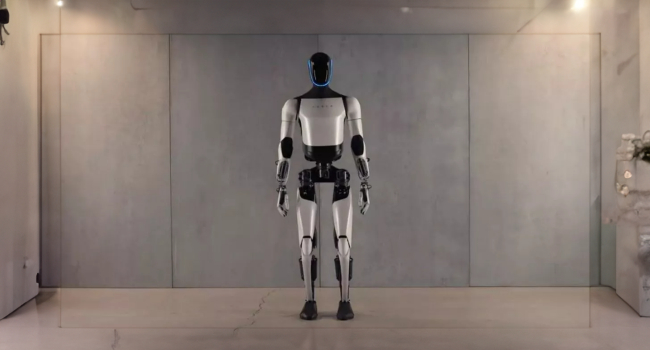
Elon Musk, the founder of Tesla and SpaceX, has once again sparked debate about the future of humanity. In a post published on November 17, 2025, on X (formerly Twitter), he stated that the humanoid robot Optimus would not only revolutionize manufacturing but also eliminate global poverty by providing everyone with a universal high income. The post included a clip from a recent Tesla investor presentation in which Musk compared the humanoid robot to a highly skilled surgeon, emphasizing its potential in both medicine and everyday life. This is not his first bold claim, but it comes at a moment when Optimus is moving from the lab to public demonstrations, inspiring both enthusiasm and skepticism.
From Concept to Reality: The Path of Optimus
The idea of Tesla’s universal humanoid robot, known as Tesla Bot or simply Optimus, was introduced in August 2021, when Musk described it at AI Day as an assistant designed for dull, repetitive, and dangerous tasks. The official announcement took place in October 2024, and by November 2025 the prototypes were already demonstrating autonomous movement. During the October premiere of the film Tron: Ares in Hollywood, Optimus appeared on the red carpet and even performed kung-fu moves for actor Jared Leto, which drew applause from the audience.
Musk’s plan is for Optimus to cost between twenty and thirty thousand dollars, making it more affordable than many Tesla cars. It will be able to walk, lift up to twenty kilograms, perform precise manipulations, and learn from AI-generated data. He has repeatedly stressed that this project would surpass the significance of Tesla’s automotive business. In a recent video, he stated that Optimus should be viewed not as a tool but as a partner to humanity.
Universal Income: How the Robot Is Supposed to End Poverty
In his post, Musk connected Optimus to a solution for a global issue, saying that the robot would eliminate poverty by creating universal high income for everyone. His reasoning is that if humanoid robots take over routine labor—from factories to elderly care—the economy could shift to a model in which people focus on creativity, science, and services. Productivity would soar, and goods would become cheaper, making basic needs widely accessible.
At the November 6 presentation, Musk expanded on this idea, saying that Optimus could work around the clock without fatigue, mistakes, or wages. He argued that in medicine it would surpass human surgeons in precision through real-time AI analysis, and in everyday life it could cook, clean, and help educate children. He encouraged investors to imagine a world where billions of robots produce everything needed, claiming that poverty would become a thing of the past.
This aligns with his earlier vision of abundance: in 2024 he estimated that the market for humanoid robots could reach ten trillion dollars by the 2030s.
Reactions: Enthusiasm and Doubt
The statement caused a storm of responses and quickly gained millions of views. Supporters interpreted it as a hopeful promise of an end to labor exploitation and greater equality. Critics, however, remained doubtful, asking who would program the robots and who would receive the income generated by their production. Economists warned of risks already visible today: automation has been eliminating jobs for years, and a universal basic income requires global agreement.
Technically, Optimus appears impressive: in 2025 the prototypes are already walking around Tesla facilities, assembling components. But mass production is still years away due to safety testing, regulatory requirements, and ethical considerations.
The Future: From Fantasy to Reality
Optimus is part of Musk’s broader ecosystem, integrating with Tesla for automotive applications, xAI for AI control, and Starlink for global connectivity. If his promises come true, the robot could reshape society by shifting it from a scarcity-based economy to one of abundance.
However, Musk acknowledged that the robot would not be a universal remedy. Poverty involves more than financial constraints; it is also tied to equality, education, and the environment. Optimus may contribute to progress, but humanity will need to guide its development wisely.
Summary
Elon Musk claims that the humanoid robot Optimus, expected to cost twenty to thirty thousand dollars, will eliminate poverty by establishing a universal high income through large-scale labor automation. The robot has already performed kung-fu moves publicly and is assembling components at Tesla’s factory. He believes the project could surpass the company’s automotive division in importance. Public reaction is mixed, ranging from hopes for abundance to fears of unemployment. Optimus represents a step toward a future in which robots free people to focus on creativity.