make preferable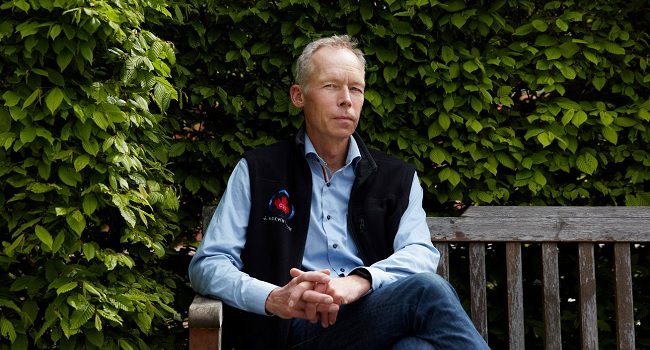
Humanity stands on the brink of a climate abyss, and even the most optimistic scenarios predict warming of about 1.7°C above pre-industrial levels. To avoid triggering irreversible tipping points—such as the collapse of glaciers, ocean currents, or the Amazon rainforest—10 billion tons of carbon dioxide will need to be removed from the atmosphere each year. This assessment was presented by Johan Rockström, director of the Potsdam Institute for Climate Impact Research, a leading UN scientific adviser, and chair of the Cop30 Scientific Council. He made this statement at the council’s first public session, created by Brazil’s Cop30 presidency in Belém.
Rockström emphasized that even with the most ambitious emission reduction measures, the world is bound to exceed the Paris Agreement’s target of 1.5°C within the next five to ten years. This threshold was already temporarily crossed in 2024. However, according to Thelma Krug, coordinator of the Scientific Council and former vice-chair of the Intergovernmental Panel on Climate Change (IPCC), the target would be considered officially breached only if average warming remains above that level for a sustained decade, factoring in projections for the next ten years.
Chris Field from Stanford University explained why maintaining the 1.5°C target remains crucial: every additional tenth of a degree sharply increases the likelihood of activating so-called tipping points. At current warming levels, many coral reefs have already passed the point of no return. Tim Lenton from the University of Exeter, a specialist in tipping points, warned that if the Atlantic Meridional Overturning Circulation (AMOC) slows down, it could trigger a cascade of catastrophic effects. He stressed that everything possible must be done to prevent this scenario.
The Scale of the Challenge: The World’s Second-Largest Industry
Field estimated that offsetting each additional 0.1°C of warming would require removing 200 billion tons of CO₂. Even under the best circumstances, this could compensate for only about 0.2°C of warming—at high cost, slow pace, and with uncertain consequences. Rockström calculated that the global requirement of 10 billion tons of CO₂ removal per year would effectively create the world’s second-largest industry after oil and gas, with annual costs of roughly one trillion dollars.
There are several methods of carbon removal. The cheapest and most effective is reforestation, costing around $50 per ton of CO₂, though it competes with agricultural land use. The most expensive is direct air capture (DAC), an industrial process that remains unscaled and costs at least $200 per ton. In between are riskier methods such as ocean fertilization, which can disrupt marine ecosystems. The IPCC has already launched a special study on these techniques, while Rockström urged that carbon removal be included in the official declarations of Cop30.
Models from the Potsdam Institute suggest that even with ambitious CO₂ removal and strict emission cuts, global warming will still reach between 1.6°C and 1.8°C. Current government policies, however, are leading toward at least 2.7°C. Rockström underlined that every tenth of a degree matters, warning that the world is heading toward a dead end and that scientists are increasingly alarmed by the troubling signs.
Positive Tipping Points and Cop30
Lenton reminded that tipping points can also be positive—when social, economic, or technological shifts accelerate the transition toward sustainability. He expressed hope that Cop30 in Belém could become such a turning point, fostering new alliances that take into account both the risks of negative tipping points and the potential for positive ones.
Christiana Figueres, one of the architects of the Paris Agreement, remarked ironically on the absence of the United States, which withdrew from the accord under Donald Trump. She noted that without them there was “no direct bullying” and argued that decarbonization had become irreversible—with or without the U.S. Ethiopia has been named a candidate to host Cop32 in 2027, while the host for Cop31 in 2026 remains undecided, with Australia and Turkey both competing for the role.
In Brief
The world will surpass 1.5°C of warming within the next few years. To avoid climate catastrophe, humanity must remove 10 billion tons of CO₂ from the atmosphere annually—an effort that would cost around one trillion dollars per year and create the second-largest industry on Earth. Even in the best case, warming will reach 1.6–1.8°C. Scientists urge Cop30 to focus on carbon removal and positive tipping points. Decarbonization continues—whether or not the United States participates.