make preferable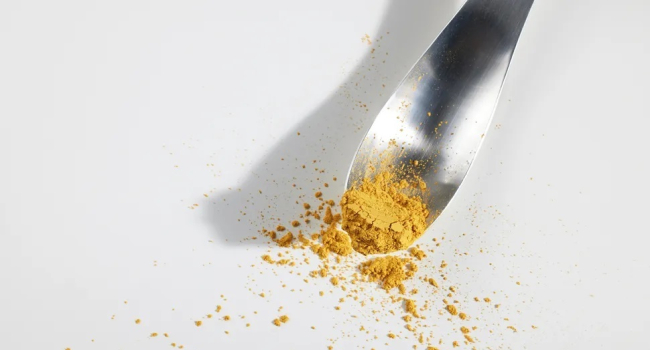
The European Space Agency (ESA) has launched a new project called HOBI-WAN (“Hydrogen Oxidizing Bacteria in Weightlessness As a source of Nutrition”), designed to produce Solein, a protein made from air, electricity, and even astronaut urine. The initiative is part of ESA’s Terrae Novae Exploration program, which focuses on developing self-sustaining missions to the Moon and Mars. A test is scheduled for the International Space Station (ISS) in 2025, aiming to tackle one of the biggest challenges of deep-space travel — food supply. The first phase of the project is valued at several million euros and involves partners Solar Foods (Finland) and OHB System AG (Germany).
The Space Food Problem: From Earth to the Stars
Food for the ISS currently comes from Earth, launched aboard Russian and American rockets. However, sending food to Mars, a journey lasting about three years, is logistically impossible — each kilogram costs between $10,000 and $20,000, and astronauts consume around 2 kg per person per day. Existing methods like canned food and hydroponic farming are not scalable.
Solein, developed by Solar Foods, is a protein powder composed of about 70% protein, along with essential vitamins and minerals. It is made from microbes that do not require soil, sunlight, or large amounts of water. On Earth, Solein is already approved as a food ingredient — it has a neutral taste and can be mixed into soups, bars, or drinks.
In space, nitrogen will be obtained from urea (found in urine), carbon from CO₂ in the cabin air, and hydrogen and oxygen from water electrolysis. Through a process of microbial fermentation using Xanthobacter bacteria in a bioreactor, 1 kilogram of Solein can be produced in just 2–3 days per cubic meter.
How Solein Works: Turning Waste into Protein
The Solar Foods technology feeds hydrogen-oxidizing bacteria with H₂, O₂, CO₂, and nitrogen. On Earth, nitrogen comes from ammonia, but in space, it will come from urea, which each astronaut produces in quantities of about 20–30 grams per day.
A bioreactor roughly the size of a wardrobe could produce 1–5 kilograms of protein per day, enough to feed a crew of four. The system is powered by solar panels or radioisotope thermoelectric generators (RTGs).
The HOBI-WAN project includes eight months of ground testing followed by microgravity experiments on the ISS. Three experimental modules will be installed in middeck lockers, equipped with gas cartridges and sensors to monitor bacterial growth and nutrient transport. Astronauts will collect samples for analysis.
Arttu Luukanen, from Solar Foods, noted that gases and liquids behave very differently in microgravity — without buoyancy, nutrient flow changes fundamentally, making this the first experiment of its kind in history.
From the ISS to Mars: Building a Closed-Loop System
If successful, HOBI-WAN could enable a closed-loop ecosystem, turning waste into food and reducing mission payloads by 30–50%. ESA plans to extend the technology to lunar bases in the 2030s under the Artemis program and to Mars missions in the 2040s.
According to Angelique Van Ombergen of ESA, this approach would significantly increase astronaut autonomy, sustainability, and psychological well-being, as future explorers will have to survive with minimal resupply.
On Earth, Solein could also help fight hunger: one hectare of land can produce 1 ton of protein per year, compared to 100 tons of meat requiring the same area. It’s also environmentally friendly, using CO₂ from the atmosphere and renewable energy.
In Short
ESA’s HOBI-WAN project aims to produce Solein protein from air, electricity, and astronaut urine through the fermentation of Xanthobacter bacteria in a bioreactor. The ISS test in 2026 will assess production rates of 1–5 kg per day for a four-person crew. The ultimate goal is autonomous food production for lunar and Martian missions, cutting cargo needs by half. Partners Solar Foods and OHB System AG will complete the first eight-month Earth phase before launch. The technology is not only for space — it could revolutionize sustainable nutrition on Earth, delivering 70% pure protein without farms.