make preferable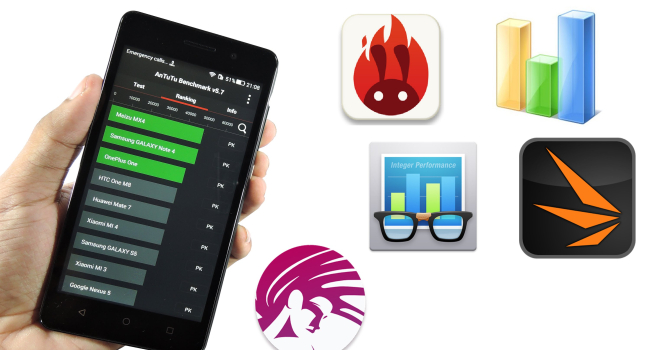
Synthetic performance tests are often the first thing people check when choosing a new smartphone. They provide easy-to-compare numbers without the need to touch the device — but how much do those scores really say about everyday performance? In 2025, when chips like the Snapdragon 8 Elite and Dimensity 9400 are breaking AnTuTu records with scores exceeding 2 million, it’s important to remember: numbers aren’t the whole story. Here’s why benchmarks are useful but far from perfect.
Why Synthetic Benchmarks Can Be Misleading
Synthetic benchmarks simulate hardware load under laboratory conditions. They’re convenient for comparisons but fail to reflect real-world nuances. Take AnTuTu, for instance: it evaluates CPU, GPU, memory, and UX (user experience), producing a total score. In 2025, top-tier models such as the Xiaomi 17 can hit over 2.5 million points — an impressive figure, but most of that score comes from CPU power that rarely matters in day-to-day use like social media, messaging, or web browsing.
For gamers or those who value smoothness, subcategories like GPU, MEM, and UX are far more meaningful. In AnTuTu v10, these sections show how well a phone handles demanding games like Genshin Impact or multitasking between apps. By contrast, Geekbench, which focuses solely on single- and multi-core CPU performance, is practically useless for real-life performance insights. Analysts in 2025 point out that even 3,000+ single-core scores for the Dimensity 9400 don’t translate to faster app launches or better battery life. To get a fuller picture, it’s better to combine results with AndroBench (for storage speed) or 3DMark (for graphics).
Another major issue is thermal throttling, where the device reduces performance as it heats up. During the first few minutes of an AnTuTu run, a phone might “fly,” but after 10–15 minutes of sustained stress (as seen in 3DMark Wild Life tests), performance can drop by 20–40%. This remains relevant in 2025 for the Snapdragon 8 Elite: in devices such as the realme GT7 Pro and HONOR Magic 7 Pro, the chip reached 55°C, causing frame drops in games. To test long-term stability, reviewers recommend tools like Burnout Benchmark or CPU Throttling Test, which simulate extended workloads and reveal how well a phone maintains performance.
If you don’t want to dig into all the metrics, reviews of the best gaming smartphones (like the ROG Phone 9) can be more practical — they highlight thermal design and real in-game FPS rather than peak benchmark numbers.
Can Benchmark Scores Be Trusted?
Even with a solid understanding of what benchmarks measure, results shouldn’t be taken at face value. Testing conditions play a huge role: at a cool 25°C, AnTuTu will deliver higher scores than in a hot or humid environment. Some manufacturers have also been known to “optimize” their software to detect benchmark apps and temporarily lift power limits — a form of cheating that previously damaged reputations (Samsung, among others). By 2025, such practices have mostly disappeared, largely because tools like AnTuTu X now make manipulation harder.
Software optimization is another critical factor. A powerful chip like Apple’s A18 Pro in the iPhone 16 Pro Max may top Geekbench charts (over 9,800 in multi-core), but if the system software is bloated or poorly tuned — as with some Android skins — that raw power doesn’t translate into responsiveness. Real-world usability depends as much on firmware efficiency as on the hardware itself.
For that reason, user reviews and brand reputation still matter. In 2025, MediaTek’s Dimensity 9400 is often praised for balancing power with heat management, while Snapdragon chips are criticized for running hot despite high scores.
In Short
Benchmarks like AnTuTu and Geekbench are useful for on-paper comparisons — especially for checking GPU, memory, and stability under stress. But in 2025, headline numbers (over 2 million in AnTuTu for flagships) don’t reflect real performance without considering software optimization, testing conditions, and long-term stability. Don’t rely on a single test: combine benchmark results with expert reviews and user feedback to find a phone that performs well both in games and in everyday use.