make preferable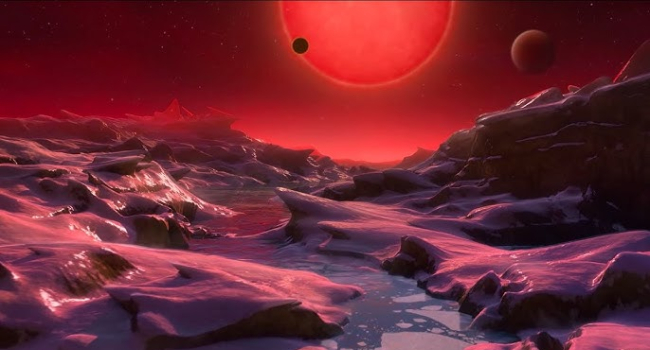
Astronomers have taken an important step in studying the exoplanet TRAPPIST-1e, often referred to as “Earth’s twin.” Using the James Webb Space Telescope (JWST), scientists analyzed its atmosphere and ruled out several scenarios, bringing us closer to understanding whether this planet could be habitable. The results of the study were published in The Astrophysical Journal Letters (AJL).
An “Earth Twin” in the Habitable Zone
TRAPPIST-1e is one of seven planets in the TRAPPIST-1 system, located just 40 light-years from Earth. It orbits a red dwarf — a small, cool star — and lies within the habitable zone, where temperatures allow liquid water to exist on the surface. This makes it one of the prime candidates for being a planet capable of supporting life.
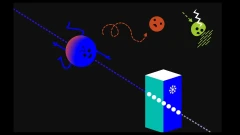
The new study, conducted by an international team of scientists, refined the characteristics of TRAPPIST-1e’s atmosphere. Using transit spectroscopy, astronomers studied how the star’s light passes through the planet’s atmosphere, leaving behind “fingerprints” of molecules that can be analyzed.
What Did They Learn About the Atmosphere?
Webb’s data showed that TRAPPIST-1e does not have a hydrogen-rich atmosphere typical of gas giants like Jupiter. It is also unlikely to have a dense carbon dioxide envelope like Venus or Mars. These findings rule out scenarios that would make the planet uninhabitable due to extreme conditions.
However, scientists consider it possible that TRAPPIST-1e has a warm nitrogen atmosphere, similar to Saturn’s moon Titan. Such an atmosphere could support stable surface conditions, including the possibility of oceans.
“TRAPPIST-1e remains one of the most promising candidates for habitable conditions. Our results narrow down the possibilities and bring us closer to understanding what kind of world this is,” said Sara Seager, professor of planetary science at the Massachusetts Institute of Technology (MIT).
Challenges and Difficulties
Studying TRAPPIST-1e is complicated by the activity of its host star. Red dwarfs like TRAPPIST-1 are prone to frequent flares and starspots, which distort spectroscopic data. Despite this, Webb’s high sensitivity made it possible to obtain more precise results than before.
“We cannot yet say with certainty whether TRAPPIST-1e has an atmosphere. But we’ve ruled out several possibilities and kept open the scenario that allows for oceans on its surface,” explained lead author Anna Glidden.
What’s Next?
In the coming years, the James Webb Space Telescope will continue observing TRAPPIST-1e and other planets in the system. Scientists hope to:
- Confirm the existence of an atmosphere and determine its composition.
- Discover whether liquid water could exist on the planet.
- Assess whether TRAPPIST-1e could support life, even in the form of simple organisms.
Further research will also help determine how stellar activity affects the habitability of planets in red dwarf systems.
Why It Matters
TRAPPIST-1e is one of the most studied exoplanets because of its proximity to Earth and its potential for life. Studying it helps scientists not only learn more about this particular planet but also understand what conditions are necessary for habitability in other star systems. This discovery is a step toward answering the question of whether we are alone in the universe.
In Short…
New data from the James Webb Space Telescope show that TRAPPIST-1e’s atmosphere is unlike that of Venus or Mars. Scientists have ruled out a hydrogen-rich or dense carbon dioxide atmosphere, leaving the possibility of a warm nitrogen atmosphere that could support oceans. Although the presence of an atmosphere has not yet been confirmed, TRAPPIST-1e remains one of the most promising targets in the search for life beyond Earth. Ongoing observations promise to reveal even more secrets of this “Earth twin.”