make preferable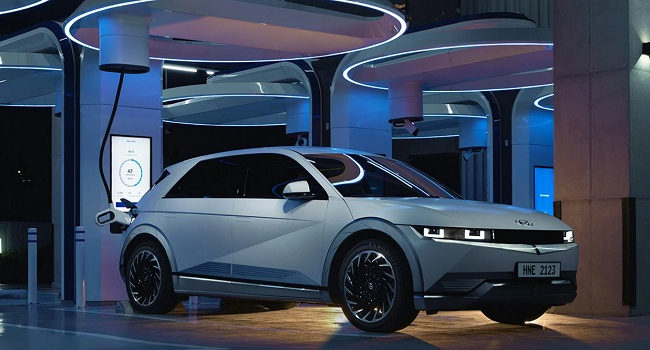
Shell, known as one of the largest players in the oil and gas market, has made an unexpected move toward green technologies. The oil giant has unveiled a special thermal fluid for electric vehicle (EV) batteries that enables charging from 10% to 80% in under 10 minutes. This breakthrough could help eliminate “charging anxiety” among EV owners, making them as convenient as gasoline cars. The development was reported by New Atlas.
The Problem of Fast Charging and Shell’s Solution
EV charging remains one of the main barriers to mass adoption. Even in the best models, such as the Hyundai Ioniq 5 with its 84 kWh battery, charging from 10% to 80% still takes 18–30 minutes at fast stations. The main reason is battery overheating, which accelerates cell wear, reduces capacity, and can lead to dangerous issues such as thermal runaway.
Shell, in partnership with engineering firm RML Group, has developed EV-Plus Thermal Fluid — a non-conductive liquid based on its proprietary Gas-to-Liquid (GTL) technology. The fluid fills all gaps between battery cells, ensuring direct contact for efficient heat dissipation. This allows batteries to handle much higher charging currents (400 kW and above), while minimizing thermal stress.
Tests on a 34 kWh battery (smaller than the Ioniq 5’s) showed charging from 10% to 80% in under 10 minutes. Shell emphasizes that the fluid not only speeds up charging but also enhances safety and extends battery life.
Hypothetical Speed: 24 km of Range per Minute
If applied to a lightweight, aerodynamic EV with an energy efficiency of 10 km/kWh (about 6.2 miles/kWh), this charging method could add 24 km of range per minute (14 miles/min). That’s five times faster than many current EVs (5 km/min).
For comparison:
- Hyundai Ioniq 5: 6.78 km/kWh.
- Lucid Air Pure (the most efficient EV on the market): 8.04 km/kWh.
Although no production EV currently reaches 10 km/kWh, Shell’s technology could influence battery design, making them more compact and lightweight without sacrificing capacity.
Competitors and Market
Shell is not the first to target ultra-fast charging. In 2025, China’s CATL introduced:
- Shenxing Gen 2: adds 2.4 km of range per second; full 0–100% charge in 20 minutes for an 800 km battery.
- Shenxing Pro Super-Fast Charging LFP: 0.8 km/s, with overheat protection, operation at –20 °C, and a warranty of 240,000 km.
As a supplier of cooling fluids for many brands (Tesla, GM, Ford), Shell could integrate its development into existing EVs. The technology will be showcased at The Battery Show North America in Detroit (October 6–9, 2025).
Advantages and Challenges
Pros:
- Speed: 70% charge in 10 minutes — faster than fueling a gasoline car.
- Safety: Non-conductive fluid prevents short circuits.
- Efficiency: Reduces battery weight and component count.
Cons:
- Tests so far only on a small 34 kWh battery; production EVs will require further adaptation.
- Battery pack design would need a complete overhaul, which could take years for automakers.
- Cost remains unknown, though Shell positions it as an “affordable solution.”
Prospects for the EV Market
As Shell transitions toward sustainable energy, it sees EV-Plus Fluid as a way to support the growing EV market, where charging infrastructure is a critical factor. If integrated into future models, the technology could accelerate the shift from gasoline to electric, especially in colder regions where batteries lose efficiency.
In Short…
Shell’s EV-Plus Thermal Fluid promises a breakthrough: charging from 10% to 80% in just 10 minutes, without compromising battery safety or lifespan. Tests on a 34 kWh pack delivered impressive results, while projections suggest 24 km of range per minute. Although the technology still needs refinement for mass-market EVs, it could transform the industry, making electric cars more convenient than gasoline vehicles. Shell — once a symbol of oil — may now help drive the green revolution, and this is only the beginning.