make preferable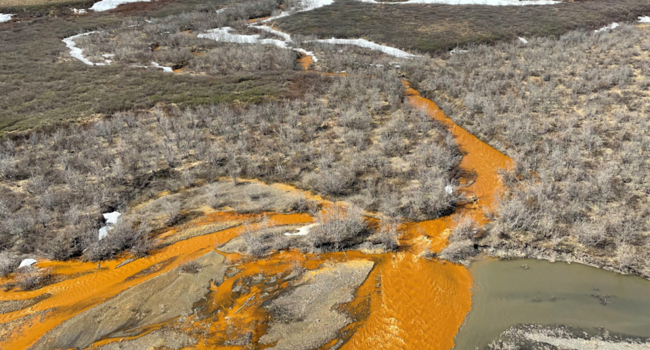
Rivers once crystal-clear and potable now flow with orange streams laden with toxic metals, transforming Alaska’s Brooks Range into an ecological crisis zone. A study published on September 8 in the Proceedings of the National Academy of Sciences documents how thawing permafrost is triggering conditions akin to acid mine drainage across dozens of Arctic watersheds.
The study focuses on the Salmon River, a National Wild and Scenic River that began turning orange in 2019 when ecologist Paddy Sullivan from the University of Alaska noticed a dramatic change during fieldwork in the Arctic tundra. A pilot warned Sullivan that the river looked “like wastewater” after snowmelt, prompting him to collaborate with biogeochemist Tim Lyons from the University of California, Riverside, and others to investigate the contamination.
Permafrost Triggers a Chemical Chain Reaction
Scientists found that warming permafrost creates a toxic cocktail of metals, including iron, cadmium, and aluminum, with concentrations exceeding the Environmental Protection Agency’s (EPA) thresholds for aquatic life. “It’s like what happens with acid mine drainage,” Lyons said. “But there’s no mine here. Permafrost is thawing and altering the chemistry of the landscape.”
As permanently frozen ground thaws, water and oxygen initiate the breakdown of sulfide-rich rocks like pyrite, forming sulfuric acid that leaches metals into waterways. Nine out of ten studied tributaries exceeded EPA toxicity thresholds for at least one metal, with some water samples showing pH levels as acidic as vinegar.
Salmon Face Multiple Threats
The contamination poses both direct and indirect threats to salmon populations critical to commercial fisheries. While current metal concentrations in fish tissue do not yet pose a human health risk, the ecological impacts are severe. Chum salmon, a key species for many Indigenous communities, struggle to spawn in gravel beds clogged with fine sediment, while iron-tainted water reduces light penetration and suffocates insect larvae that salmon feed on.
Field observations note a “sharp decline in macroinvertebrate diversity and fish abundance” linked to the water’s color change in streams. In Kobuk Valley National Park, researchers observed the complete disappearance of several fish species, including juvenile Dolly Varden and sculpin, following the onset of orange water.