make preferable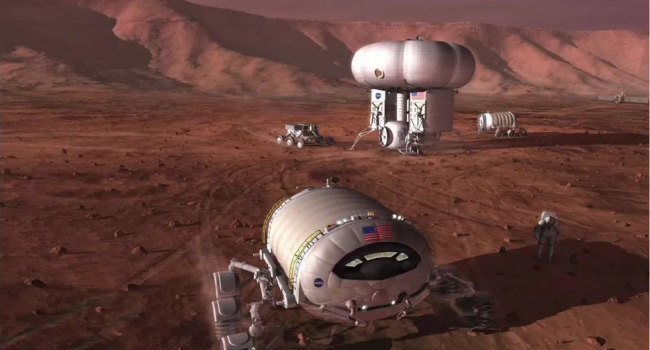
Scientists have developed an innovative method of producing oxygen for astronauts that could prove essential for future missions to the Moon and Mars. By replacing bulky centrifuges with magnetic systems, life-support modules can become lighter, more efficient, and more reliable, according to a study published in Nature Chemistry in August 2025.
The Problem with Traditional Systems
On the International Space Station (ISS), oxygen is produced through water electrolysis — splitting water into oxygen and hydrogen with electricity. On Earth, gas bubbles naturally rise due to gravity, but in microgravity they stick to electrodes, requiring centrifuges to separate them. These centrifuges are:
- Bulky: adding size and weight to the spacecraft.
- Energy-hungry: consuming valuable power.
- Prone to failure: mechanical parts reduce long-term reliability.
This makes conventional systems unsuitable for long-duration missions to the Moon or Mars, where every kilogram and watt must be optimized.
The Magnetic Solution
A team led by Álvaro Romero-Calvo of the Georgia Institute of Technology, in collaboration with Germany’s ZARM Center of Applied Space Technology and Microgravity and the University of Warwick, proposed an alternative: using magnetic forces to control gas bubbles in microgravity.
Two methods were tested:
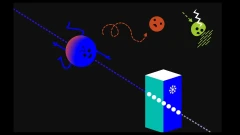
- Diamagnetism – Water is weakly repelled by magnetic fields, which can guide gas bubbles toward collection points.
- Magnetohydrodynamics (MHD) – Magnetic fields interact with electrical currents created during electrolysis, generating swirling liquid flows that sweep bubbles away, mimicking the effect of centrifuges.
Both approaches allow passive bubble separation without moving parts, reducing mass and power demand.
Testing and Results
The team tested the system in the 146-meter drop tower at ZARM in Bremen, Germany, which provides 9.3 seconds of microgravity per experiment. Results showed:
- Up to 240% higher efficiency in bubble separation compared to standard methods.
- Improved performance of electrolysis cells under space-like conditions.
“After four years of hard work, we have shown that magnetic forces can control gas bubbles in microgravity. This is a key step toward more efficient and reliable life-support systems,” said Romero-Calvo.
Development Path and Future Plans
The concept was first outlined in Romero-Calvo’s PhD dissertation at the University of Colorado. Since then, the project has received support from NASA’s Innovative Advanced Concepts (NIAC) program, as well as funding from ESA and the German Aerospace Center (DLR).
Next steps include:
- Suborbital rocket tests to validate performance in longer microgravity phases.
- Scaling up to full-size systems for long-duration missions.
- Reliability studies to confirm suitability for multi-year Mars expeditions.
Why It Matters
Current systems like the Oxygen Generation Assembly (OGA) on the ISS are too heavy and complex for Mars missions. NASA Ames analysis concluded they are not viable for deep-space due to high mass and energy requirements. The magnetic system addresses these issues by offering:
- Mass reduction — up to 50% lighter than OGA for Mars-class missions.
- Passive operation — no moving parts, greater durability.
- Energy efficiency — lower power consumption over long missions.
In Short…
The development of magnet-based electrolysis systems marks a breakthrough for space life-support technology. By eliminating bulky centrifuges and harnessing diamagnetism and magnetohydrodynamics, astronauts will have lighter, more reliable oxygen systems. Successful drop-tower experiments in Bremen pave the way for suborbital and orbital trials. Backed by NASA, ESA, and DLR, this technology could play a crucial role in enabling long-term missions to the Moon, Mars, and beyond.