make preferable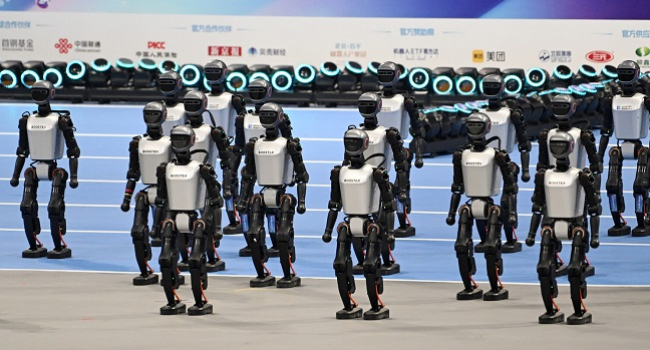
On August 14, 2025, Beijing hosted the opening of the first-ever World Humanoid Robot Games, which will run until August 17. This unique event, combining sports, technology, and creativity, has brought together more than 500 robots and 280 teams from 16 countries. The competitions are taking place at the National Speed Skating Oval “Ice Ribbon,” previously used during the 2022 Winter Olympic Games. Here’s a look at what these games are and why they matter for the development of robotics.
Scale and Participants
The World Humanoid Robot Games have attracted participants from around the globe, including teams from the United States, Germany, Japan, and others. Among them are students, schoolchildren, and professionals from leading companies such as:
- Yushu Technology, Xinghaitu, Tiangong, Fourier — China’s robotics leaders.
- Unitree Robotics — creators of robots that took part in the first Muay Thai tournament in May 2025.
- Universities including Tsinghua University, Peking University, and Shanghai Jiao Tong University.
In total, 500 humanoid robots are competing in 487 events across 26 categories. The event is organized as an international platform for sharing expertise and promoting robotics, particularly among young people.
Disciplines and Format
The games’ program combines sports and applied challenges, showcasing the capabilities of humanoid robots:
- Sports disciplines: Sprinting, long jump, football (including the first fully autonomous 5-on-5 match), boxing, freestyle wrestling, and dancing.
- Applied tasks: Sorting medications, cleaning hotel rooms, operations in warehouses and on factory conveyor lines simulating real-world work.
- Creative performances: Robots played keyboards, guitar, and drums; performed hip-hop and martial arts; and participated in a fashion show inspired by Chinese culture.
The opening ceremony resembled the Olympic Games: teams marched in a parade carrying the event’s flag, and a symbolic flame was lit inside glowing “intelligent cubes.” The relay with these cubes began on July 15 at the Great Wall of China, visiting key cultural and technological sites in Beijing.
Technical Features and Challenges
Robots compete in two modes:
- Autonomous: Using visual recognition and decision-making algorithms.
- Teleoperated: Dependent on stable 5G networks optimized for control.
Despite the high level of technology, there were mishaps: one robot fell during a football match, and another had to be carried off during the fashion show. These moments highlight that robotics still faces challenges in stability and coordination.
Organizers have created a high-tech venue with dedicated zones for robot setup and charging, ensuring optimal conditions for participants. The event is supported by the World Robot Conference, featuring 1,500 exhibits from 200 companies.
Significance and Prospects
The World Humanoid Robot Games are not only a spectacular event but also a platform for:
- Technology testing: Competitions assess robots’ abilities in real-world conditions, from sports to simulated professional activities.
- International cooperation: Participation from 16 countries fosters knowledge exchange and advances global robotics.
- Science popularization: The games inspire young people to engage with technology and engineering.
China, a leader in humanoid robot production, is using this event to strengthen its industry reputation. The opening of Robot Mall in Beijing — the first store dedicated to humanoid and household robots — coincided with the games and conference, underscoring the country’s technological progress.
In Brief…
The first World Humanoid Robot Games in Beijing, held from August 14 to 17, 2025, have become a landmark event in technology. More than 500 robots from 16 countries are competing in 26 disciplines, from football and dancing to sorting medications and cleaning. Despite technical glitches, the event demonstrates the potential of humanoid robots and solidifies China’s position as a leader in robotics. The games not only test technology but also inspire a new generation to study science, marking a new era in AI and automation development.