make preferable
The HONOR 400 Pro smartphone, set to launch on July 1, 2025, introduces a fresh take on retro photography with six film simulation presets designed to replicate the color profiles of legendary Kodak and Fujifilm films. Renowned Russian photographer Alexey Sulima — known for his work with glossy magazines and commercial projects — tested the KE100, KP160, and NC200 modes and compared them with real film photos taken on a point-and-shoot camera loaded with Kodak Ektar 100, Kodak Portra 160, and Fujifilm 200. Here’s what his experiment revealed, and whether the smartphone can truly deliver analog authenticity.
Film Simulation Mode: How It Works
The HONOR 400 Pro features an advanced camera system using computational photography to recreate the look of retro film. The new presets emulate the distinctive traits of popular films, including color rendering, grain, and contrast:
- KE100: Mimics Kodak Ektar 100 with vivid colors and sharp detail, ideal for landscapes.
- KP160: Recreates the soft tones and warm palette of Kodak Portra 160, popular for portraits.
- NC200: Imitates the natural hues of Fujifilm 200, suitable for everyday scenes.
These modes add a touch of grain, reduced contrast, and signature color profiles characteristic of analog photography. Users can select a preset through the camera app and immediately preview the result.
Alexey Sulima’s Test: Smartphone vs. Point-and-Shoot
Sulima compared photos taken with the HONOR 400 Pro to those captured on a basic point-and-shoot film camera. He used Kodak Ektar 100, Kodak Portra 160, and Fujifilm 200 film rolls to assess how closely the smartphone could replicate their aesthetics. Side-by-side comparisons showed strong color resemblance, but key differences emerged.

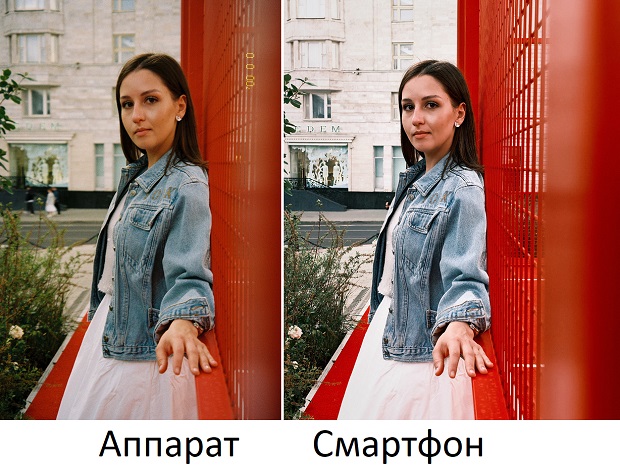
Photographer’s Conclusions:
- Shooting Experience: A film point-and-shoot uses a "point and shoot" approach, with exposure determined by the film's light sensitivity (typically ISO 100–200). Users can't change aperture or shutter speed, limiting control. The smartphone, on the other hand, uses algorithms to automatically adjust exposure, white balance, and other settings in real time.
- Color Rendering: HONOR 400 Pro’s presets accurately capture the mood and tones of the original films. KP160, for instance, does well with Portra’s warm hues. However, digital processing sometimes results in slightly more saturated colors than actual film.
- Film Limitations: Low ISO film performs best in daylight. In evening or indoor lighting, film quality drops, while the smartphone handles a wide range of conditions with ease thanks to intelligent processing.
- Emotional Value: Film photography offers the thrill of the unknown — you don’t see the results until development. The smartphone lacks this mystery but provides more control and predictability.
Smartphone Advantages:
- Versatility: The HONOR 400 Pro can shoot in retro style under any lighting conditions, including indoors or at night.
- Instant Results: No need to develop film — the result appears immediately.
- Customization: Users can choose presets and fine-tune settings for various scenes.
Drawbacks:
- Less Authentic: Digital simulation can’t fully reproduce the chemical depth of real film, which may disappoint purists.
- Less “Magic”: The lack of development time removes the anticipation and uniqueness of each shot.
Context: Retro Photography in 2025
Retro aesthetics are trending in mobile photography. Brands like HONOR, Xiaomi, and Apple are incorporating film-style filters to meet growing demand for vintage looks. Features like those on the HONOR 400 Pro appeal to a younger audience that loves the style but not the hassle of analog photography. Still, some photographers argue that digital simulations can’t capture the “soul” of analog photos.
The HONOR 400 Pro (and the base HONOR 400 model) will go on sale July 1, 2025. The phone is powered by a Snapdragon 8 Elite chip, features a 50 MP triple camera system, and a 6.78-inch AMOLED display with a 120 Hz refresh rate. A full review is coming soon to our site.
Conclusion
The film simulation mode in the HONOR 400 Pro, tested by Alexey Sulima, offers an impressive alternative to analog photography. The KE100, KP160, and NC200 presets effectively reproduce the styles of Kodak and Fujifilm films. While digital processing can't fully match the authenticity of film, the smartphone provides flexibility and convenience, enabling users to shoot in retro style anytime, anywhere. For those looking to blend nostalgia with modern technology, the HONOR 400 Pro is a compelling choice that combines powerful hardware with creative photographic tools.