make preferable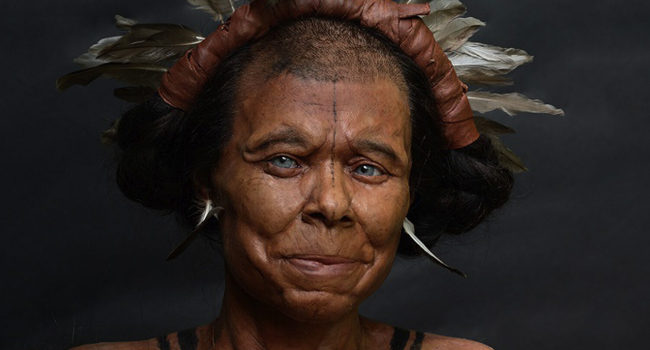
Belgian researchers from Ghent University (UGhent), in collaboration with an international team, have reconstructed the appearance of a hunter-gatherer woman who lived 10,500 years ago in the Meuse River valley—today’s Belgium. Named “Margaux” after the site where her remains were found, the woman turned out to have fair skin and blue eyes—features that challenge our previous understanding of prehistoric Europeans. The results, published on the university's website, shed light on the physical diversity of Mesolithic populations.
How Was Margaux’s Face Reconstructed?
The woman’s remains were discovered in a cave near the Meuse River. To recreate her appearance, scientists used advanced methods:
- 3D skull scanning: High-resolution digital modeling allowed precise analysis of her facial structure.
- Ancient DNA analysis: Genetic data revealed details about her skin, eye, and hair pigmentation.
- Sculptural reconstruction: Dutch artists Adrie and Alfons Kennis, known for their lifelike models of early humans, created a realistic facial model.
These technologies not only brought her appearance to life but also provided valuable data on the genetic diversity of Mesolithic populations.
Unexpected Facial Features
The results surprised researchers. Unlike darker-skinned Mesolithic individuals like Britain’s famous “Cheddar Man” (c. 10,000 years ago), Margaux had light to medium-toned skin and blue eyes. These traits contrast with the widely accepted image of dark-pigmented European hunter-gatherers, believed to have adapted to low sunlight levels in the post-glacial period.
“Our work shows that ancient European populations were more diverse in appearance than we thought. Skin pigmentation varied even within the same genetic group,” said project lead Professor Isabelle De Groote.
Genetic analysis confirmed that Margaux belonged to the Western Hunter-Gatherer (WHG) group, yet her phenotype was more similar to later populations influenced by migration from sunnier regions. This supports the theory of complex adaptation and genetic mixing during the Mesolithic.
Context: The Mesolithic and the Evolution of Appearance
The Mesolithic (ca. 10,000–5,000 years ago) was a transitional period between the Paleolithic and Neolithic, during which European hunter-gatherers lived in a changing post-glacial climate. Earlier studies, such as DNA analysis of Cheddar Man, suggested dark skin and blue eyes as the typical phenotype of the time. However, the discovery of Margaux indicates that pigmentation was more variable than previously thought.
This variation could be attributed to:
- Genetic drift: Small, isolated Mesolithic populations could rapidly develop unique traits.
- Migration: Contacts with southern populations, where lighter skin was an adaptation to stronger sunlight.
- Natural selection: Lighter skin may have aided in vitamin D synthesis in low-UV environments.
Posts on X and platforms like ResearchGate note that Margaux’s discovery aligns with recent findings of genetic diversity in Europe dating back as far as 14,000 years, including discoveries in Italy and France.
Significance of the Discovery
Reconstructing Margaux’s appearance has several key implications:
- Diversity in Mesolithic populations: The findings support the idea that early Europeans were more physically diverse than traditionally believed, reshaping views on adaptation.
- Technological progress: The use of 3D scanning and DNA analysis opens new paths for studying ancient remains, especially when only partial skeletons survive.
- Cultural impact: Reconstructions like Margaux’s bring prehistory closer to the public, allowing people today to “see” their distant ancestors.
Future Research Prospects
Researchers plan to continue analyzing remains from other Mesolithic sites to better understand how genes for fair skin and blue eyes spread across Europe. By integrating this with archaeological evidence—such as tools and ornaments—they hope to reconstruct the broader lifestyle of these populations.
Future projects may involve comparing Margaux with other reconstructions, such as the “Humans of Los Humo” in Spain, to identify regional distinctions. The same methods could also be applied to other periods, such as the Paleolithic or early Neolithic, and even to reconstruct animals like mammoths, offering insight into their evolutionary adaptations.
This study not only enriches our understanding of Mesolithic Europeans but also demonstrates how cutting-edge science can bring ancient humanity vividly back to life.