make preferable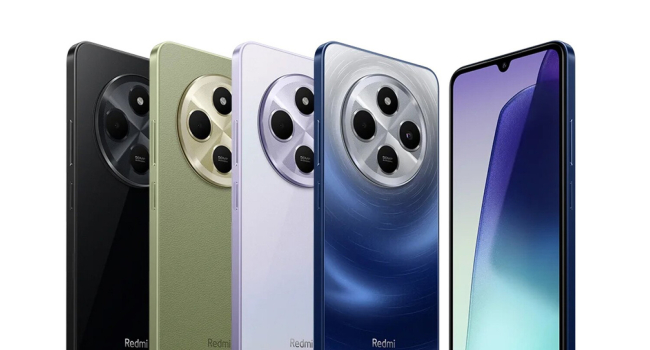
Xiaomi has unveiled the Redmi 14C, a budget-friendly smartphone that punches above its price point with impressive features. Announced in August 2024, the device is now available in a charger-free version, slashing its cost to a record low. According to ITHome, this model benefits from a government subsidy in China, making it even more affordable. Here’s what makes the Redmi 14C stand out, its key specifications, and why it’s a sensation in the budget segment.
A New Approach to Affordability
The Xiaomi Redmi 14C in its new configuration omits the charging adapter, reducing production costs by 30 yuan. Combined with a 70-yuan government subsidy in China, the base model (4 GB RAM + 64 GB storage) now costs just 469 yuan ($66). The 4 GB RAM + 128 GB storage variant is priced at 569 yuan ($80). This positions the Redmi 14C as one of the cheapest smartphones globally with modern features like a 120 Hz display and a large battery.
Removing the charger is a controversial move, mirroring a trend started by Apple and Samsung, but it lowers the price for consumers. Xiaomi recommends using an 18W Power Delivery (PD) adapter, which can be purchased separately or reused from other devices.
Prices in Other Markets (as of May 2025):
- India: From $118 (6 GB + 128 GB).
- Pakistan: $83 (4 GB + 128 GB).
- Kenya: From $96 (4 GB + 128 GB).
- Europe: From $120 (4 GB + 128 GB).
- Japan: $126 (4 GB + 128 GB).
- Uganda: $98 (8 GB + 128 GB, promotional price).
Note: Prices vary due to taxes, logistics, and promotions. The phone is available through platforms like Amazon, Flipkart, or local retailers, often with free delivery.
Redmi 14C Specifications
The charger-free Redmi 14C is identical to the base model launched in August 2024. Its specifications are remarkable for its price, competing with devices like the Infinix Hot 50i and Tecno Spark 30C.
- Display:
- 6.88" IPS LCD, 720x1640 (HD+), 260 ppi.
-施 - Refresh rate up to 120 Hz (auto-adjusts for power efficiency). - Brightness: 450 nits (600 nits in High Brightness Mode), 1500:1 contrast ratio.
- TÜV Low Blue Light certification, DC Dimming, flicker-free for eye comfort.
- Protection: Corning Gorilla Glass 3.
- Processor:
- MediaTek Helio G81 Ultra (12 nm, 8-core, up to 2.0 GHz).
- GPU: Mali-G52 MC2.
- AnTuTu (v10): 262,000 points, suitable for daily tasks and light gaming (e.g., PUBG Mobile on low settings).
- Memory:
- RAM: 4 GB, 6 GB, or 8 GB (LPDDR4X) + up to 16 GB virtual RAM via Memory Extension.
- Storage: 64 GB, 128 GB, or 256 GB (eMMC 5.1) + microSD up to 1 TB.
- Cameras:
- Main: 50 MP (f/1.8, CMOS) + 2 MP (depth, f/2.4) + 0.08 MP (auxiliary).
- Front: 13 MP (f/2.0, CMOS).
- Features: Xiaomi Imaging Engine, Night Mode, AI filters, 1080p/30fps video, cinematic LUT filters.
- Limitation: Poor low-light photography.
- Battery:
- 5160 mAh, up to 1.5–2 days of use (social media, video, calls).
- Charging: 18W (PD adapter recommended, not included).
- Smart Charging Engine to extend battery lifespan.
- Connectivity and Sensors:
- Wi-Fi 5 (802.11ac), Bluetooth 5.4, GPS, NFC (market-dependent).
- Dual 4G (no 5G in this version), Dual SIM + microSD.
- 3.5 mm audio jack, side-mounted fingerprint scanner, AI face unlock.
- Design:
- Materials: Plastic + glass (back panel in some colors).
- Colors: Midnight Black, Sage Green, Dreamy Purple, Starry Blue (gradient).
- Dimensions: 171.88 x 77.8 x 8.22 mm, weight 207–211 g.
- Protection: IP52 (splash resistance).
- Software:
- HyperOS based on Android 14.
- 2 years of OS updates + 4 years of security patches.
- Smooth performance but includes pre-installed apps.
Note: A 5G version of the Redmi 14C with a Snapdragon 4 Gen 2 chip, 33W charging, and a glass back is available in some regions (e.g., India). Priced at $120–150, it’s a distinct model from this 4G variant.
Pros and Cons
Pros:
- 120 Hz display, a rarity in this price range, delivers smooth scrolling and animations, outperforming the iPhone 16e’s 60 Hz screen.
- Massive 5160 mAh battery lasts up to 2 days.
- 50 MP AI-enhanced camera for vibrant daytime photos.
- Supports microSD up to 1 TB and retains a 3.5 mm jack.
- Ultra-low price ($66–80 in China), widely available globally.
- NFC and HyperOS with 4 years of security updates.
Cons:
- No charger included, which may frustrate buyers.
- Low-resolution HD+ display and modest brightness (450 nits) struggle in sunlight.
- Cameras perform poorly in low light; auxiliary lenses (2 MP + 0.08 MP) are largely nominal.
- Helio G81 Ultra processor is weak for heavy gaming or multitasking.
- Plastic body and IP52 rating fall short of the iPhone 16e’s IP68.
Comparison with Competitors
The Redmi 14C competes with budget smartphones like the Infinix Hot 50i, Tecno Spark 30C, and Samsung Galaxy A06.
- Infinix Hot 50i ($100–120): 90 Hz display, 5000 mAh battery, 48 MP camera. The Redmi 14C wins with its 120 Hz screen and larger battery, but the Infinix has a brighter display (700 nits).
- Tecno Spark 30C ($110): Helio G56, 90 Hz display, 48 MP camera. The Redmi 14C excels in screen refresh rate and software, but the Tecno offers more stylish design.
- Samsung Galaxy A06 ($130): Exynos 850, 60 Hz display, 5000 mAh battery. The Redmi 14C surpasses it in screen, camera, and price, though Samsung provides longer software support.
Vs. iPhone 16e: The iPhone 16e ($600) boasts an A16 Bionic chip, iOS 18, and a superior camera but is 7–10 times more expensive with a 60 Hz display, making the Redmi 14C a better value for budget-conscious buyers.
What’s Next?
Xiaomi is preparing the Redmi 15C (2025) with an improved Full HD+ display and a 5G-enabled Snapdragon 4 Gen 3 chip. The Redmi 14C 5G is gaining traction in India, where demand for affordable 5G phones is rising. New configurations (e.g., 8 GB + 256 GB) are expected to launch globally by July 2025.