make preferable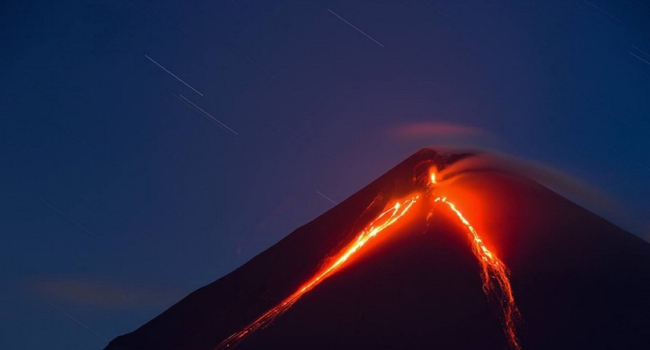
An international team of scientists from Germany, the USA, and Japan has conducted a study revealing that massive volcanic eruptions tied to the Deccan Traps in India played a pivotal role in reshaping Earth’s climate and ecosystems 66 million years ago. These events were intricately synchronized with shifts in our planet’s orbit, according to findings published in Science Advances.
Earth’s Orbit and Its Climate Connection
The quasi-periodic wobbles in Earth’s orbit around the Sun regulate the amount of solar radiation reaching the planet’s surface. These fluctuations not only affect the total heat received but also its distribution across latitudes, shaping the intensity and duration of seasons. The researchers found that these orbital cycles aligned with periods of heightened volcanic activity, creating a complex interplay that influenced the climate.
The Deccan Traps: A Legacy of Colossal Eruptions
The Deccan Traps are vast basalt formations blanketing much of western India, formed by a series of volcanic outbursts at the end of the Cretaceous period. With lava deposits reaching thicknesses of up to two kilometers, they stand as a testament to the staggering scale of those ancient events.
How Eruptions Altered the Climate
By analyzing geological records from the South Atlantic and Northwest Pacific, scientists determined that these eruptions released vast quantities of sulfur dioxide (SO₂) and carbon dioxide (CO₂) into the atmosphere. These gases had opposing effects on the climate:
- Sulfur dioxide (SO₂) triggered temporary cooling by reflecting sunlight and lowering surface temperatures.
- Carbon dioxide (CO₂) drove long-term warming by trapping heat in the atmosphere.
These climatic shifts were mirrored in fluctuations of osmium isotope ratios preserved in oceanic sediments.
Two Phases of Volcanic Fury
The study identified two distinct phases of intense volcanic activity, each coinciding with major climate shifts and ecological upheavals. During the first phase, massive sulfur emissions created harsh conditions for life. Geochemical models further revealed that the volume of erupted magma was far greater than previously estimated.
Why This Discovery Matters
This research offers deeper insight into how powerful volcanic events in Earth’s past could dramatically alter its climate and ecosystems. These findings enhance our ability to model potential future climate scenarios and illuminate the interplay between geological and astronomical forces that shape life on our planet.