make preferable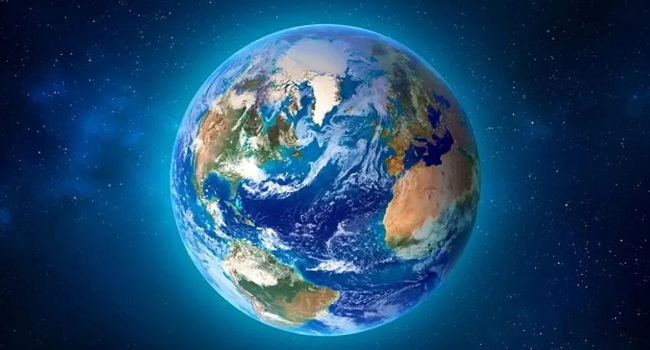
Geophysicists from Cardiff University have discovered that two massive structures in Earth’s lower mantle, extending toward the outer core, differ in origin and composition. This finding could shed light on the instability of Earth’s magnetic field, according to a study published in Scientific Reports.
Giant Structures Beneath the Earth: What Do We Know?
These anomalous formations were first identified in the 1980s through seismic wave analysis. Known as “low-velocity zones,” they are vast accumulations of dense material, stretching up to 900 kilometers in height and spanning thousands of kilometers in width. Located beneath the Pacific Ocean and Africa, they were long assumed to share the same composition—until now.
This new research challenges that assumption. Geodynamicist James Panton explains that the distinct compositions of these colossal structures influence heat transfer and convective currents in the outer core, which could, in turn, affect Earth’s magnetic field.
Remnants of Ancient Crust at 3,000 Kilometers Deep
The study supports the hypothesis that these structures are partly composed of ancient oceanic crust, submerged into the mantle through tectonic activity. However, a striking difference emerged: the Pacific structure contains 50% more fresh oceanic material than its African counterpart.
This disparity is attributed to the Pacific Ring of Fire, an active tectonic zone that continuously feeds new material into the mantle. In contrast, the African structure is more stable, with its composition having blended over time into a less dense mix.
Impact on Earth’s Magnetic Field
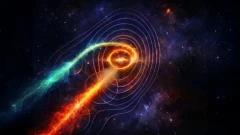
Previously, scientists thought temperature was the primary driver of these structures’ seismic properties. However, the research reveals that their composition and density are the key factors. Variations in heat exchange with the core, caused by these formations, may lead to localized weakening of the magnetic field.
This effect is particularly evident in Africa, where an anomalous dip in magnetic field strength has already been observed.
What’s Next?
To fully confirm how these processes influence the magnetic field, scientists will need additional data, including gravitational observations. Yet, it’s already evident that events unfolding 3,000 kilometers beneath Earth’s surface play a pivotal role in shaping the planet’s protective magnetic shield.