make preferable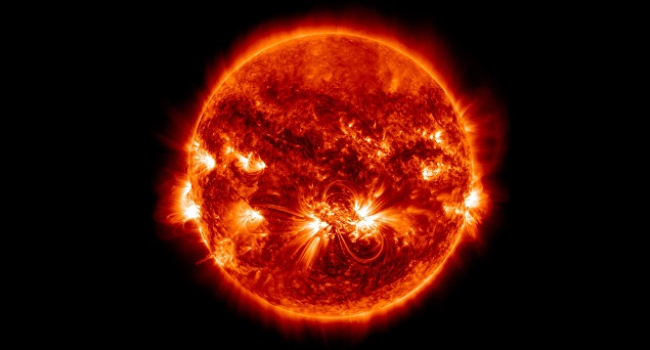
A team of scientists from the University of Tsukuba and Japan’s National Institute of Advanced Industrial Science and Technology has uncovered a potential link between solar activity and earthquakes. According to their findings, changes in Earth’s surface temperature driven by solar cycles may alter the pressure on tectonic plates, increasing the likelihood of seismic events. This research was published in the scientific journal Chaos.
How Might the Sun Trigger Earthquakes?
The researchers employed mathematical models and computational analysis to compare data on earthquakes, Earth’s surface temperature, and solar activity. They discovered that incorporating temperature data into predictive models enhances their accuracy, particularly for shallow earthquakes.
The primary mechanism, as proposed by the team, involves temperature fluctuations affecting the properties of rock formations. Elevated solar activity could make rocks more brittle and prone to cracking. This, in turn, impacts underground water flows and increases pressure along tectonic plate boundaries, potentially setting the stage for seismic activity.
How Could This Improve Earthquake Prediction?
While the influence of solar activity on seismic events appears to be modest, the scientists believe that factoring in solar cycles could refine existing earthquake forecasting methods. By accounting for temperature variations, predictions for shallow seismic events could become more precise, paving the way for more effective early warning systems.
This discovery highlights the intricate interplay between cosmic and geophysical processes, offering a promising step forward in the science of earthquake prediction.