make preferable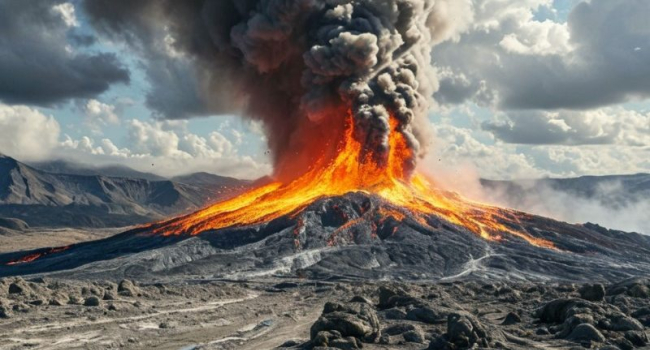
An international team of scientists from fields including geology, hydrology, chemistry, and physics has conducted a study on one of the most powerful volcanic events in Earth’s history: the Los Chocoyos supereruption, which occurred approximately 80,000 years ago in what is now Guatemala. Their findings challenge the long-held belief that this eruption could have triggered a new ice age. The research has been published in Communications Earth & Environment (CEE).
The Most Powerful Eruption in History
The Los Chocoyos supereruption, associated with the Atitlán volcanic system, was long considered a climatic catastrophe. Scientists previously theorized that the massive volume of volcanic ash ejected into the atmosphere caused prolonged cooling, potentially even initiating an ice age. However, this new study casts doubt on that hypothesis.
Climatic Consequences
To obtain precise data, the researchers analyzed ice cores—samples extracted from Greenland and Antarctica. These ice layers preserve a record of the atmosphere’s composition during and after the eruption. The analysis refined the eruption’s date to approximately 79,500 years ago.
The study confirmed that the eruption did indeed cause global cooling and reduced the amount of sunlight reaching Earth’s surface. However, contrary to expectations, these effects were not long-lasting. The volcanic ash dispersed within a few decades, and the climate soon returned to normal. This suggests that the supereruption’s impact was far less dramatic than previously assumed.
Implications for the Future
These findings call into question popular theories suggesting that future supereruptions could spark a new ice age or threaten human survival. While such events may cause devastating short-term consequences, the resulting climatic shifts might be less persistent than once thought.
Scientists plan to continue their research, examining the effects of other ancient supereruptions to better understand their influence on climate and improve predictions for potential future changes.