make preferable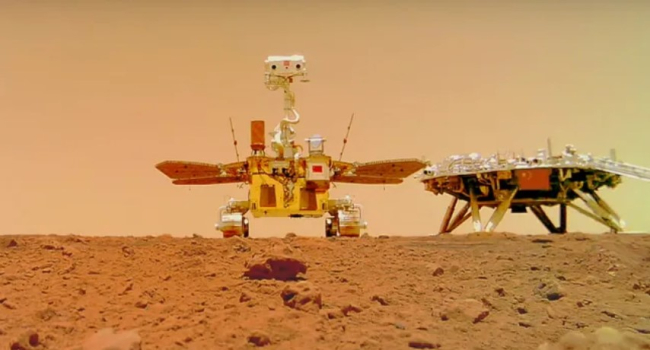
Chinese scientists have found new evidence that supports the long-standing hypothesis that billions of years ago, the northern part of Mars was covered by an ocean. Traces of the ocean were found in data sent back by the Zhurong rover. Moreover, scientists have seen the outline of an ocean coast.
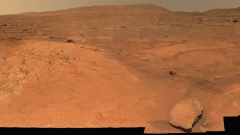
Zhurong landed on the surface of Mars in 2021, choosing the Utopia Plain. The device traveled 2 km, studying the geology of the surrounding area, looking for signs of water or ice.
Professor Bo Wu of the Hong Kong Polytechnic University and his colleagues, combining observations from the rover’s cameras and ground-penetrating radar with remote sensing data from orbiters, have discovered several features at the rover’s landing site that are associated with water. These include crater-like cones, gullies, sedimentary channels and mud volcano formations, which the scientists believe indicate a coastline.
After studying the composition of surface sediments in the area, the researchers said that the ocean probably existed 3.68 billion years ago. During this time, various water-related minerals, including hydrated silica, began to form on the ocean floor.
“The water was heavily silted, [which] formed a layered sedimentary structure,” explained study co-author Sergey Krasilnikov. The ocean froze for 10,000 to 100,000 years, the coastline began to erode, and about 260 million years later it dried up.
Associate Professor Benjamin Cardenas of Pennsylvania State University cast doubt on this scenario, arguing that billions of years of erosion would have also destroyed the fragile features of the coastline. Professor Wu agreed, but added that the coastlines discovered by Zhurong were formed by subsequent asteroid impacts.
The presence of water would mean that conditions favorable for the emergence of microorganisms could have existed on Mars at one time. Scientists are trying to understand why this water disappeared about 3 billion years ago. According to one theory, the reason was frequent storms on the Sun, which destroyed the once dense Martian atmosphere.