make preferable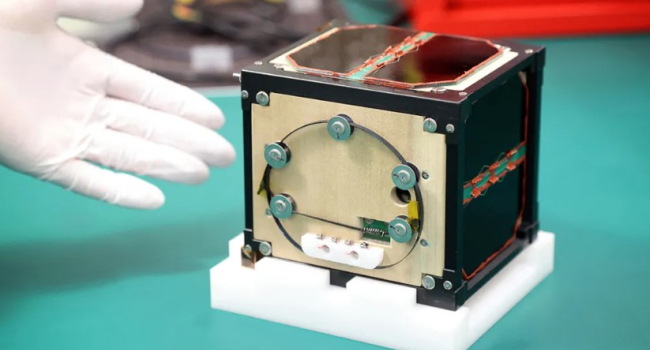
Japanese scientists have sent a wooden satellite into space for the first time in the world, which may change the practice of using materials in this field, writes The New York Times.
It took them years to develop the cube-shaped satellite, which was launched into space on a SpaceX rocket from the Kennedy Space Center in Florida. Starting in December, it will spend six months in low Earth orbit.
A group of Kyoto University researchers came up with the LignoSat concept in collaboration with the Japanese lumber company Sumitomo Forestry. Their goal is to test how renewable materials such as wood are preserved in space, where there are extreme climatic conditions, harmful cosmic rays and energetic solar particles. In addition, scientists hope that the new satellite will not leave additional pollutants in the atmosphere.
"Before, no one had thought of using wood in rocket science," Koji Murata, professor of forestry and biomaterials science at Kyoto University, which worked on the satellite, told the newspaper. :
In the early 1900s, wood was a common building material for airplanes, so Murata thought it could also be used for satellites. Japanese engineer and former NASA astronaut Takao Doi raised this question in 2017 and has been testing this theory ever since. In 2022, they began by sending wood samples from three different types of trees (birch, cherry and magnolia) to the International Space Station.

Each of the samples spent eight months in space and surprisingly, the researchers found no signs of wood decay or surface damage. In the end, the team decided to make their model out of magnolia wood, which is known for its light weight and least chance of cracking.
Two carpenters from Kyoto then created LignoSat's wooden components, consisting of plastic and silicone parts. They assembled the cube using a traditional Japanese crafting technique that doesn't require any screws or glue. Unlike metal, wood can shrink when it loses moisture, so this is something scientists still need to investigate, as well as how well the satellite can measure Earth's magnetic field.
Six months later, the decommissioned satellite will re-enter Earth's atmosphere and burn up. If it were a metal satellite, it would emit tiny particles of aluminum oxide that can damage the ozone layer. But because it is made of wood, the satellite will emit water vapor and carbon dioxide.
Looking ahead, Murata has ambitious plans for the future. "I hope to grow wood on Mars," he said. "At one time I thought it was impossible to send anything made of wood into space."