make preferable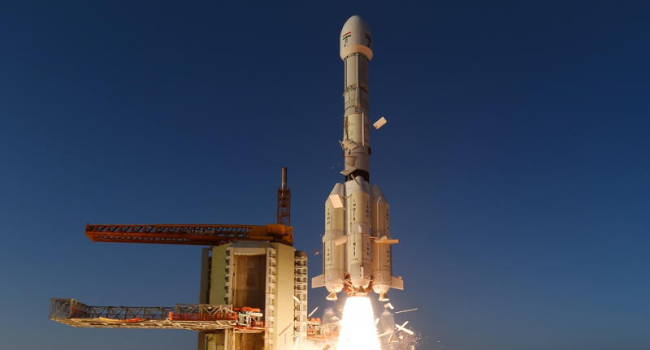
At a recent event in New Delhi, the chairman of the Indian Space Research Organisation (ISRO), Shri Somanath (Sreedhara Somanath), announced plans to bring back soil samples from the Moon's surface by around 2028. This mission will require two launches, as India currently lacks rockets powerful enough to carry all the necessary modules—ranging from the transfer module to the return module—in a single launch.
If successful, India will become the fourth country after the USSR, the USA, and China to bring lunar soil samples back to Earth. Though India won’t be the first, it would not diminish the scientific achievement that Indian scientists and engineers will make if they manage to accomplish this project. Additionally, India plans to carry out the mission with comparatively low costs, as the program has been allocated only 21 billion rupees (about $250 million). To recall, the Chandrayaan-3 mission, which involved sending a rover to the Moon, cost the country’s budget $74 million.
The Chandrayaan-4 mission will require two separate launches. One rocket will carry the transfer module and the return capsule into lunar orbit, while the other will carry the lander and ascent modules. The ascent module will gather samples, then launch back into lunar orbit to dock with the transfer module. In orbit, the samples will be transferred into the return capsule, which will then embark on the journey back to Earth.
India still needs to develop and test docking technology for modules in Earth's orbit, anticipated to happen either by the end of this year or in 2025. There is also ongoing work on a robotic arm to collect samples on the Moon’s surface and drill up to several meters deep. The program aims to gather about 3 kg of soil near the Moon’s south pole, close to where the Chandrayaan-3 lander with the rover touched down.
Notably, the Chandrayaan-5 mission, which will follow Chandrayaan-4, is planned to deliver a 350-kg rover to the Moon. This will be a joint project between India and Japan, with Japan’s JAXA agency building the rover and India’s ISRO managing its delivery to the Moon. But that’s another story.