make preferable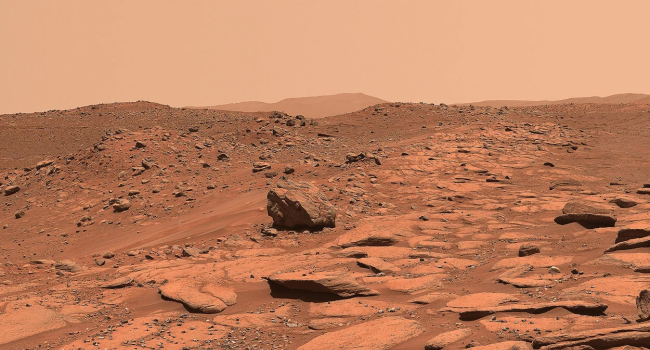
Scientists studying data from NASA's Curiosity rover recently gained new insight into how Mars went from a potentially habitable, water-rich planet to a completely uninhabitable desert.
As Curiosity passes through Mars' Gale Crater, it performs tests on the rocks. Using its Sample Analysis at Mars (SAM) and Tunable Laser Spectrometer (TLS) instruments, the rover heats rock samples to analyze the gases produced. Performing this task on carbon-rich minerals, or carbonates, which often serve as a source of climate data, Curiosity revealed an isotopic composition that suggests two possible past climate scenarios on Mars.
According to the first scenario, the carbonates could have formed through repeated wet and dry cycles, implying extreme evaporation. In the second scenario, the carbonates could have formed in extremely salty, extremely cold water.
"These formation mechanisms represent two different climate regimes that may represent different habitability scenarios," said Jennifer Stern, a research scientist at NASA's Goddard Space Flight Center and co-author of the new study.

"Wet-dry cycles indicate variability between more habitable and less habitable environments, while cryogenic temperatures in the mid-latitudes of Mars indicate a less habitable environment where most of the water is locked in ice and unavailable for chemistry or biology, and what exists is extremely it is salty and unfavorable for life," he added.
These two scenarios are not new concepts. Other evidence on Mars, from specific rock formations to the presence of specific minerals, supports both. But the importance of this particular study is that it is the first time that isotopic evidence from rock samples has confirmed them.
But with these results comes bad news. "Our samples are not consistent with an ancient environment (biosphere) on the surface of Mars," said study leader David Burt, a scientist at NASA's Goddard Space Flight Center. before the formation of these carbonates."