make preferable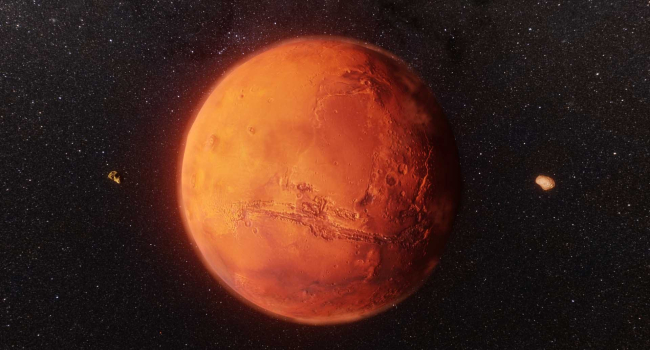
Scientific views on life on Mars have drastically changed in the nearly 100 years of its study. Initially, the Red Planet was considered just harsh for life, like the Sahara at midday, but later it became clear that known biological life could not have existed there for at least the last few billion years. Before that, there may have been life on Mars, and how it died out is revealed by the new discoveries of Curiosity.
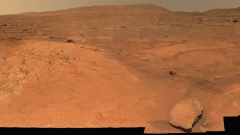
Years of observing Mars and remotely studying its geology and soils suggest that around 4 billion years ago, the planet had a vast shallow ocean, lakes, rivers, and streams. However, the climate then changed sharply and irreversibly. What happened on the planet during this period and what its climate became is shown by the latest findings from NASA’s Curiosity rover in the 154 km wide Gale crater. This crater was formed by a meteorite impact 3.5–3.8 billion years ago.
Studying rock samples from the crater floor using the rover's onboard instruments (Sample Analysis at Mars and Tunable Laser Spectrometer) shows that water existed in the crater, and therefore minerals characteristic of wet environments, such as clays, sulfates, and carbonates, formed there.
From the perspective of climate change assessment, carbonates, formed from carbon and oxygen, are considered the most valuable. Lighter isotopes of atoms quickly evaporate into the atmosphere, while heavier ones remain. The ratio of these isotopes allows scientists to infer the climate, including temperature, water acidity, and the composition of both the water and atmosphere.
“The isotope readings from these carbonates point to extreme evaporation, suggesting that the carbonates likely formed in a climate that could support liquid water only temporarily,” said David Burtt of NASA. “Our samples do not indicate the presence of an ancient surface biosphere, though this does not rule out the possibility of a subsurface or surface biosphere that arose and ended before these carbonates formed.”
The state of the carbonates suggests that Mars, once habitable, was dying through two processes, either simultaneously or separately. First, the planet began experiencing periodic intense “bursts” of moisture evaporation. Second, the water began freezing, and combined with evaporation, this led to an extreme increase in salinity. In such an environment, no known form of life, not even bacteria, could survive. There remains hope of finding life (even microbial) beneath the surface of Mars, but Earth’s science may not be capable of this in the next 10–15 years.