make preferable
Triton is Neptune’s largest moon and the coldest object in the Solar System with a surface temperature of -235°C. Exploring it seems like a daunting task, but scientists from University College London are already developing a mission plan for it. The project is called Arcanum, and the results of the study were published in the Aeronautical Journal (AEJO).
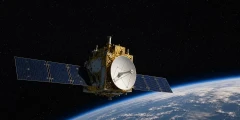
The Arcanum project includes three stages: an orbiter, a maneuvering orbiter, and a lander. The orbiter, called Somerville, will deliver a scientific platform to the Neptune system and will serve as a relay for communication with the landing section. The device is equipped with cameras, spectrometers, a magnetometer, and an infrared telescope, which will allow us to study Neptune and its moons, as well as examine the Kuiper Belt.
The maneuvering module Tenzing will be responsible for precisely guiding the lander before it descends to the surface of Triton. The lander itself, called Bingham, will be equipped with cameras, a seismometer, a thermometer, and a mass spectrometer to analyze Triton's soil. Scientists predict that the Arcanum mission could be ready for launch in 2030, and reach Neptune by 2045. However, despite the plan, the project has not yet received support from major space agencies, and its implementation remains in question.