make preferable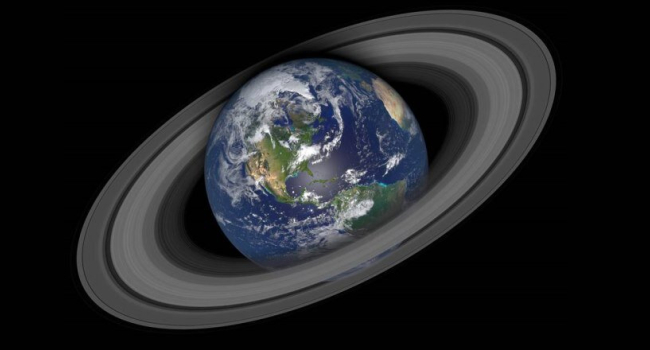
Around 466 million years ago, Earth may have been surrounded by rings similar to those of Saturn. Scientists have proposed a similar hypothesis before, but now researchers from Monash University in Australia have provided evidence for it. As reported in the journal Earth and Planetary Science Letters (EPSL), this hypothesis is supported by the discovery of distinctive meteorite craters on the surface of our planet.
Scientists have identified 21 craters located within 30 degrees of the equator. They attribute them to the Ordovician impact burst, an event in which a large asteroid was broken up near Earth by its tidal forces, creating a cloud of debris that formed temporary rings.
According to the researchers, the likelihood of meteorites falling in such a limited region by chance is extremely small, comparable to flipping a hypothetical three-sided coin, if such a thing existed, and getting heads 21 times in a row. Therefore, scientists explain the localization of the craters by the fact that an asteroid broke up near the Earth and formed rings around it.
For millions of years, material from these rings fell to the Earth, creating craters and leaving meteorite debris recorded in the geological record. Scientists also suggest that this ring could have blocked sunlight, contributing to the global cooling that was observed at the end of the Ordovician period - one of the coldest in the history of the Earth.
This discovery forces us to reconsider the influence of such celestial phenomena on the evolution of life on Earth and raises questions about the existence of other ancient ring systems that could have influenced the climate and biosphere of our planet.