make preferable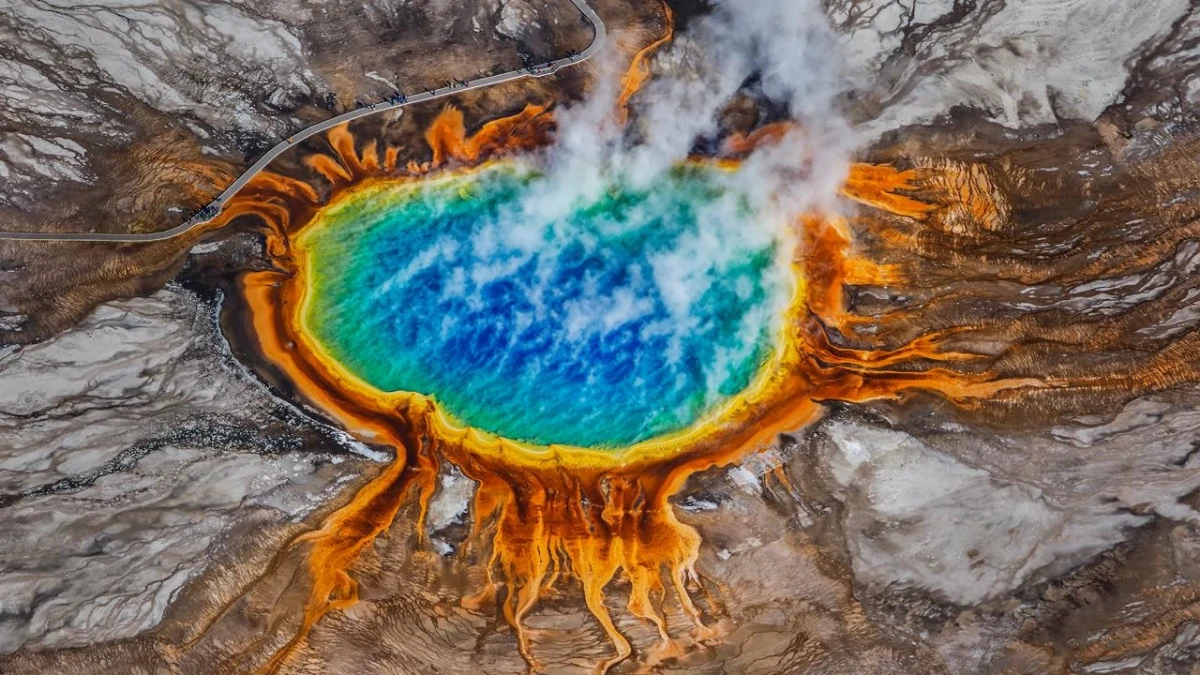
A Yellowstone supereruption would not be a sudden, unheralded disaster. In the weeks leading up to it, scientists would likely notice a whole set of alarming signs: earthquake swarms, accelerating ground uplift, changes in geyser activity, and rising concentrations of volcanic gases. In the worst-case scenario, these processes could culminate in a VEI-8 eruption, sending ash tens of kilometers into the sky and inflicting severe damage on infrastructure across North America.
At the same time, this is specifically a hypothetical scenario. Yellowstone regularly exhibits seismic and hydrothermal activity, and even a combination of several unusual signs still does not mean an eruption is inevitable, according to Sciencedaily.com.
Scientists Would Notice the First Changes Several Months in Advance
About 631,000 years ago, one of the largest known eruptions of the Yellowstone volcanic system occurred in what is now northwestern Wyoming. Ash spread across a large part of North America, and particles injected into the atmosphere affected the climate far beyond the region.
Today, such an event would be impossible to miss. Yellowstone is constantly monitored by seismometers, GPS stations, crustal deformation instruments, satellites, and sensors in geyser areas. Scientists also regularly analyze volcanic gases and the chemical composition of the water.
The first alarming sign in such a scenario would be an unusual earthquake swarm. Specialists would watch especially closely if the hypocenters gradually moved upward and became shallower. This could indicate the movement of magma or hot hydrothermal fluids.
But an earthquake swarm alone would not mean a catastrophe was approaching. Yellowstone experiences thousands of earthquakes every year, and similar periods of activity have already occurred without a subsequent eruption.
Within a Month, the Ground Would Begin Rising Rapidly
After several weeks in this hypothetical scenario, the earthquakes would continue and begin occurring closer to the surface. At the same time, GPS stations would register divergence between points, while satellite radar would detect accelerating uplift of the ground surface.
Such a combination could indicate magma intruding into the Earth’s crust. But even then, scientists would not immediately declare that an eruption had begun.
In 2013–2014, Yellowstone already experienced accelerated uplift in parts of the caldera—more than 15 cm per year—combined with heightened seismic activity. In 2014, earthquakes of up to magnitude 4.8 occurred, after which the uplift gave way to subsidence. Researchers linked that episode to the movement of hydrothermal fluids rather than rising magma.
That is why, in a new crisis, scientists would first intensify monitoring: install additional seismometers and GPS stations, take water and gas samples more frequently, and begin coordinating more closely with emergency services.
Two Weeks Before, the Situation Could Become Critical
In the scenario under consideration, activity continues to intensify sharply. Earthquakes become more frequent and shallower, prolonged seismic tremors appear, and the surface begins rising by centimeters over just a few days.
The hydrothermal system also changes. Geysers begin behaving unpredictably, and even the famous Old Faithful stops erupting with its usual regularity. Changes in chemical composition are detected in the water, while concentrations of carbon dioxide and sulfur gases rise in the caldera area.
Taken together, these signs would lead scientists to suspect that magma really was moving upward.
In the model described, two weeks before the catastrophic event, the probability of a supereruption within the next three weeks reaches 85–92%. The volcanic hazard level is raised to the watch stage, and the aviation hazard code is elevated to orange.
An evacuation zone with a radius of about 100 km is imposed around Yellowstone, affecting roughly 200,000 residents and large numbers of tourists.
The First Hours: Steam First, Then Magma
The eruption itself would not necessarily begin with the instant explosion of the entire caldera.
At first, magma could intrude into the shallow hydrothermal system, rapidly heating enormous volumes of water. When water turns to steam, its volume at atmospheric pressure expands by about 1,700 times. If this process occurs underground, the sudden expansion can trigger powerful phreatomagmatic explosions, hurling steam, mud, and rock fragments kilometers into the air.
After several hours, gas-rich magma at a temperature of about 650–800 °C reaches the surface. As pressure drops, the gases dissolved in it begin to expand rapidly, turning the magma into a mixture of pumice and volcanic ash.
A giant eruption column 30–50 km high forms—far above the typical cruising altitude of passenger aircraft.
If the volume of ejected material continues to grow, scientists would realize they may be dealing with a VEI-8 supereruption—the highest category on the Volcanic Explosivity Index.
Ash Would Paralyze a Vast Territory
The towering column ejects ash into the upper atmosphere. Some of the material initially spreads in all directions, and then high-altitude winds begin carrying the finer particles thousands of kilometers away.
Even more dangerous are pyroclastic flows—extremely hot, fast-moving mixtures of gas, ash, and rock fragments. If parts of the eruption column collapse, they can travel for tens of kilometers, destroying vegetation and buildings in their path.
In the immediate eruption zone, the chances of survival would be extremely small. However, with timely evacuation, the number of deaths caused directly by the eruption itself could be relatively limited compared with the scale of the overall consequences.
Much farther from Yellowstone, ash becomes the main enemy.
In Denver, located about 800 km from the volcanic system, the sky could darken under an enormous cloud. Significant amounts of ash would fall across the northwestern United States and adjacent areas of Canada. In some places, the ash layer could reach dozens of centimeters or more.
Electricity, Water, and Transport Would Begin to Fail
Volcanic ash is not just a layer of dirt. Fine particles can damage engines, clog ventilation systems, and disrupt power grids. When wet, ash becomes electrically conductive and can cause short circuits on transmission lines and at substations.
At the same time, its weight places stress on roofs and structures.
When electricity starts going out, new problems follow: water pumps and treatment facilities stop working, heating systems and gas stations experience disruptions, and mobile communications and the internet are affected.
Airports shut down because volcanic ash is dangerous for aircraft engines. Road and rail transport are also disrupted.
As a result, ordinary supply chains begin to break down rapidly. Stores run out of food, hospitals lose access to some equipment and medications, and the population faces shortages of fuel, water, and other essentials.
Within Days, the Crisis Would Extend Beyond the United States
Three days after the eruption begins, much of North America is already feeling its effects.
In areas closest to Yellowstone, ash thickness could be measured in meters. For Billings, Montana, some models estimate as much as 1.8 m of ash. Salt Lake City and Boise could receive dozens of centimeters.
In more distant regions of the United States, northern Mexico, and southern Canada, there would be less ash, but still enough to seriously complicate breathing and infrastructure operations.
Agriculture would take a major hit: ash covers pastures and fields, contaminates water, and destroys crops. Livestock die.
If the eruption continues, further collapses of eruption columns would generate pyroclastic flows, while subsidence in parts of the caldera would open new fractures and magma outlets.
After Several Months, a Global Climate Effect Would Begin
After several months, the main threat to people in North America would no longer be so much the eruption itself as its long-term consequences.
Sulfur ejected high into the atmosphere in the form of sulfur dioxide turns into sulfate aerosols. They reflect part of the Sun’s radiation and can spread across the entire Northern Hemisphere.
This leads to temporary global cooling. According to the climate models cited in the study, the Earth’s average temperature is unlikely to fall by more than about 1.5 °C, although changes could be much stronger in certain regions and seasons.
Central North America, meanwhile, could remain significantly colder than usual.
Years Later, the Consequences Would Hit Food Supplies and the Economy
Agricultural losses in the United States and Canada would affect the global market. Reduced supplies of grain, corn, and soybeans would drive up food prices.
At the same time, problems with transport, insurance, the banking system, and infrastructure recovery would persist. A large-scale disruption in the North American economy would inevitably affect other countries.
In affected areas, ash would be lifted back into the air during dry and windy weather. Rain and snow would turn it into heavy mud, clogging drains and complicating recovery work.
For people with respiratory diseases, the polluted air would become an especially serious problem. Damage to medical infrastructure would further complicate treatment.
Yellowstone Would Not Wipe Out Humanity
Despite its catastrophic scale, a Yellowstone supereruption would not automatically mean human extinction.
Even such a scenario would not erase life from Earth. The main blow would fall on North America and the global economy, while the climatic consequences would spread much more widely.
Over time, the ash would settle, the atmosphere would clear, and vegetation would begin returning to the hardest-hit areas. Grasses would gradually appear where ecosystems had been destroyed, followed by forests. People, too, would return to these territories and begin restoring agriculture.
Researchers note that the long-term health consequences could be significant: prolonged exposure to volcanic ash is associated with lung and cardiovascular diseases. However, the exact future death toll in such a scenario cannot be determined.
Therefore, the idea of Yellowstone as an event that would guaranteedly mean “the end of humanity” does not correspond to the scenario described. It would be a global catastrophe with consequences lasting many years and probably decades, but not necessarily the end of human civilization or the species itself.
And most importantly: the scenario described is a thought experiment, not a forecast. Yellowstone does indeed remain an active volcanic system, but unusual earthquakes, ground uplift, or changes in geysers do not by themselves mean that a supereruption is approaching.