make preferable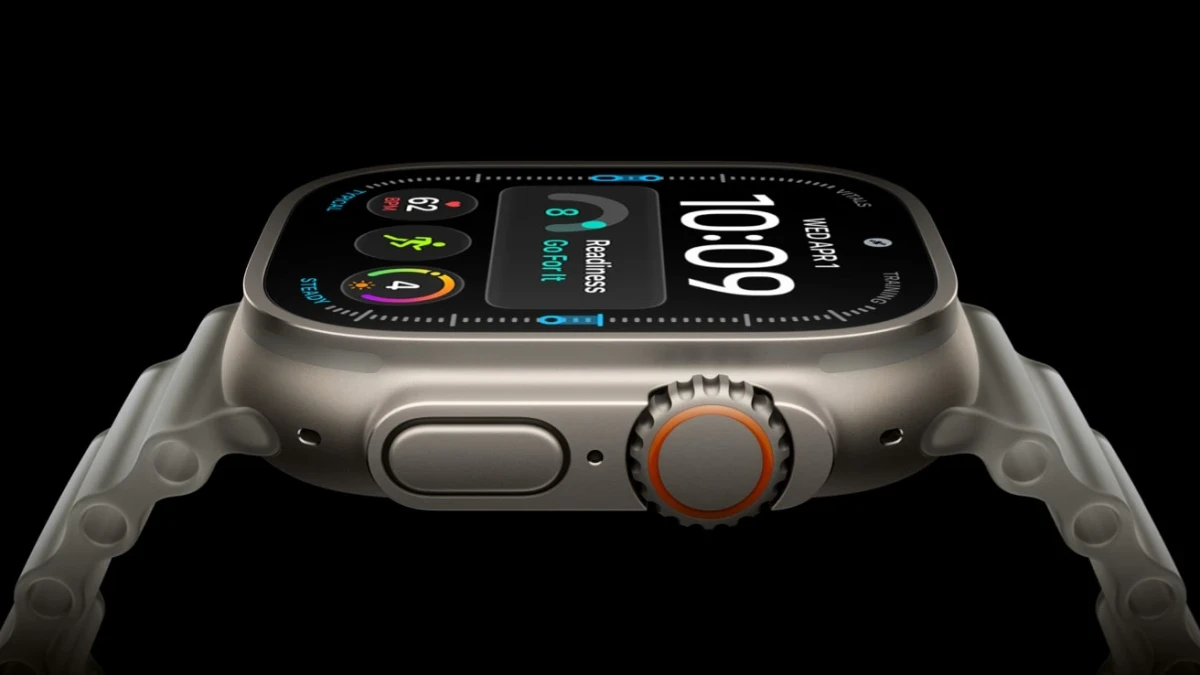
The new Apple Watch models will be able to recognize sounds around the wearer, transcribe the last few seconds of a conversation, and automatically create notes based on what they hear. Apple emphasizes that the watch does not record or store the original audio. But the device’s capabilities raise a broader question: how ready are we for technologies that can potentially listen to us at almost any moment?
As TechCrunch writes, this aspect of the new Apple Watch became one of the most unexpected moments of Apple’s September 9 presentation. The company, traditionally seen as especially sensitive to privacy issues, is effectively making the listening of surrounding space part of an everyday device.
There are several features involved at once — Audio Intelligence, Live Rewind, and Siri Recap. And while the first mostly relates to accessibility technology, the other two already touch on conversations between people.
From recognizing a siren to capturing a conversation
Audio Intelligence appears to be the most harmless of the new features. Apple Watch uses on-device AI to recognize surrounding sounds: sirens, alarms, doorbells, a baby crying, and other important signals.
For people with hearing impairments, this could be genuinely useful. The watch can alert the wearer to a sound they did not hear themselves, and in some cases the feature does not even require a nearby iPhone to work.
The benefit here is obvious: for example, recognizing a fire alarm or carbon monoxide detector could potentially be critically important. So the very idea of analyzing ambient sound in such a scenario is unlikely to trigger serious privacy concerns.
The situation is much more complicated with Live Rewind.
This feature lets you go back about 15 seconds and get a transcription of the words that were just spoken. To do this, it is enough to double-press the Digital Crown. The resulting transcription can be saved in a separate Siri app and revisited later.
Apple offers fairly everyday scenarios: a person may forget the title of a recommended book, an important point made by a colleague, or simply fail to catch part of a conversation.
But this feature has another side as well. The user gains the ability to preserve what another person said, even if that person had no intention of making their words part of a record.
And this is where the issue of consent arises.
“It’s not a recording” — but the conversation still remains
Apple says the new features are designed with privacy in mind. The company does not create or store audio recordings, and the original sound is inaccessible even to Apple itself. The resulting transcriptions and summaries are protected by end-to-end encryption, while conversation participants are not identified or linked to their words.
Siri Recap, another new feature, works somewhat differently. It analyzes surrounding conversations and creates brief notes from them: a title, a summary, and key points. This is not a verbatim transcription.
Apple sees this, for example, as a way to automatically save the main takeaways after a meeting or a parent-teacher conference.
At the same time, Siri Recap is not supposed to run constantly by default. The user chooses when to turn the feature on — for example, only during working hours — and can disable it at any moment through Control Center.
From a technical point of view, this differs noticeably from some AI devices that rely on constant passive listening. But from the perspective of people nearby, the difference may not be so obvious: there is a device next to them capable of analyzing an ongoing conversation.
The problem is not only privacy, but also the law
As TechCrunch notes, the emergence of such features raises not only ethical but also legal questions.
Manufacturers of other AI devices already warn users about the need to comply with laws on recording conversations and to obtain any required consent. At the same time, the rules may vary depending on the jurisdiction.
With Apple Watch, the situation is even more complicated because the company specifically speaks about the absence of an audio recording. If the device stores only a text transcription, it is still unclear how such data will be treated, for example, in court. Theoretically, such a record could become evidence, but the absence of the original audio could make it difficult to verify its authenticity. In addition, the relevant rules may differ from state to state.
For now, this is more a question for the future than an established legal practice. But the spread of such devices will inevitably force legislation to catch up with the technology.
What changes in people’s behavior
There is also a more fundamental problem: what happens to ordinary human communication when people know that there may be a device nearby capable of preserving what they say.
TechCrunch points to research suggesting that the presence of recording devices, social networks, and constant data collection can influence people’s behavior. When a person understands that they may be recorded or documented, they may become more cautious in their words and actions.
With a camera, this is relatively easy to notice. To shoot a video on a smartphone, you need to take out the phone, point it at what is happening, and press a button. This is a visible action that at least gives people around some chance to understand what is happening.
Apple Watch is much less noticeable. To use Live Rewind, it is enough to double-press the Digital Crown.
Apple has provided an audio signal and a full-screen animation with a microphone icon to indicate that the feature has been activated. But the gesture itself remains far less obvious than a smartphone raised in front of someone’s face.
That is why the question is not only whether the device records audio, but also how inconspicuous the very act of preserving a conversation becomes.
Apple is trying to draw a new line
In this sense, the new Apple Watch models sit on a rather fine line.
On the one hand, sound analysis can be a powerful accessibility technology. Recognizing a siren, fire alarm, or a baby crying solves a very specific problem and can be especially important for people with hearing impairments.
On the other hand, Live Rewind and Siri Recap turn the watch’s microphone into a tool for working with everyday conversations. Now, what is said near a person can not only be heard, but also turned into text or a short AI summary.
At the same time, Apple is deliberately separating its solutions from the concept of an always-on AI companion. Siri Recap does not switch on automatically forever, the user controls the moment of activation, audio is not stored, and the results are protected by encryption.
But this is exactly where the main question raised by TechCrunch emerges: are technical safeguards enough to keep the very idea of an always-listening technology from feeling like an invasion of privacy?
There is no answer to that yet. Perhaps Apple really has found an acceptable balance between convenience and privacy. But another possibility cannot be ruled out: the company is gradually acclimating users to a world in which a microphone near a person stops being something unusual.
And if such technology becomes the norm, it may change not only what our devices can do, but also how we talk to one another.