make preferable
Astronomers, with participation from NASA, have combined the two largest observational datasets of Type Ia supernovae to produce a new sample of 2,884 objects, named Unite. Using this dataset, researchers tested how the expansion of the Universe has changed over time and found indications that dark energy may not be constant. The work is published in the Monthly Notices of the Royal Astronomical Society.
Why Type Ia Supernovae Matter
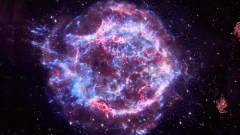
Type Ia supernovae are one of cosmology's primary tools. Their intrinsic brightness is well understood, allowing astronomers to estimate distances to their host galaxies from their apparent brightness. By comparing these distances with the expansion rate of the Universe, scientists construct a "map" of cosmic dynamics. Observations of Type Ia supernovae in the late 1990s provided the key evidence that the Universe's expansion is accelerating—an acceleration now attributed to dark energy, an unknown component making up about 70% of the Universe's energy density.
Until now, supernova data came from different surveys and were processed using different methods, introducing the risk of systematic errors that could skew conclusions about cosmological parameters.
How Unite Was Assembled
The team did not simply combine two datasets—Pantheon+ and DES‑SN5YR. Instead, they re‑processed all observations through a unified framework. They re‑determined the masses of host galaxies for more than 98% of the objects, refined data calibration, and corrected a number of systematic effects that could previously have introduced biases. The result, according to the authors, is the most complete and homogeneous sample of Type Ia supernovae available to date.
Such volume and data uniformity allow for a more precise tracing of how the Universe's expansion rate has changed at different stages of its history—from relatively nearby objects to those that exploded billions of years ago.
What Comparisons with Other Data Showed
The main result emerged when the Unite data were compared with independent observations—the cosmic microwave background and the large‑scale distribution of galaxies. Within the standard model, where dark energy is treated as constant (ΛCDM), a notable discrepancy was found between these datasets.
The researchers interpret this as an indication that dark energy may evolve over time. However, the authors explicitly stress that this is not a discovery of new physics. Bayesian analysis showed only a weak preference for a model with evolving dark energy over the standard cosmological model. Moreover, the strength of this signal depends on which additional observations are combined with the supernova data.
What This Means for Cosmology
The new results strengthen the possibility that dark energy is not merely a constant "cosmological constant," as assumed by the ΛCDM model. If its properties do indeed evolve, that would require a revision of our understanding of fundamental physics. But definitive conclusions will require further independent verification and observations.
This is why the Unite dataset is seen as an important resource for future research. It already allows for more rigorous testing of various cosmological scenarios and will prove valuable as next‑generation survey data become available.