make preferable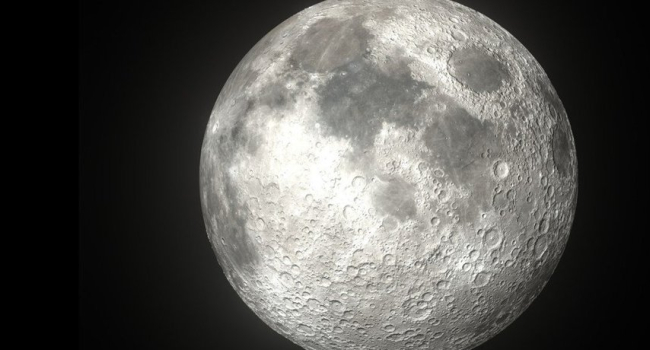
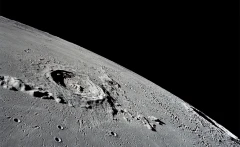
The Moon, being Earth's closest cosmic neighbor, can become a major source of raw materials with significant economic value. As space technologies advance, attention is gradually shifting from the mere fact of human presence on the Moon to the question of what resources can be extracted from its soil and rocks.
Among the most promising directions are helium-3 and rare earth elements — substances potentially in demand in energy, electronics, and other high-tech industries.
Helium-3: Fuel for future energy
The almost complete absence of an atmosphere became one of the factors shaping the composition of lunar soil. For billions of years, the Moon's surface was directly exposed to the solar wind. Its particles gradually penetrated the upper layers of the regolith, where various elements and isotopes accumulated, including helium-3. On Earth, this isotope is extremely rare. Therefore, lunar soil is considered a potential source of a substance virtually absent on our planet in comparable quantities.
The main interest in helium-3 is tied to thermonuclear energy. Scientists are exploring the possibility of using it in a reaction with deuterium. One of the potential advantages of this option is a lower yield of high-energy neutrons compared to certain other fusion reactions. Theoretically, this could reduce the radiation load on equipment and the volume of radioactive waste.
However, a vast distance remains between theoretical potential and industrial application. The concentration of helium-3 in lunar regolith is estimated at roughly 1.4–15 parts per billion. Thus, to obtain a significant amount of the isotope, immense volumes of soil will have to be processed. Mining in this case will look little like a traditional pit or mine. The regolith will need to be collected and heated to release the gases contained within it, followed by the separation and purification of helium-3. The economic feasibility of such a system will depend on the cost of the entire technological chain — from soil extraction to processing and transportation.
Rare earth elements: Raw materials for high tech
Another potentially valuable resource is rare earth elements. This group of 17 chemically similar metals plays an important role in modern electronics and other high-tech manufacturing.
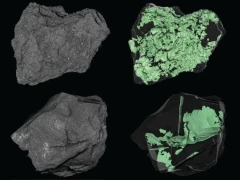
Researchers pay special attention to lunar KREEP rocks, named for their elevated concentrations of potassium, rare earth elements, and phosphorus. The most notable KREEP concentrations are located in the Procellarum KREEP Terrain region on the near side of the Moon.
If further research confirms the presence of economically viable concentrations and the feasibility of their extraction, such rocks could become targets for future resource missions. Unlike helium-3, rare earth elements already have an established market demand on Earth. However, this does not automatically mean that mining them on the Moon will be more profitable than supplies from Earth.
From exploration to industry
Transforming lunar resources into an economic asset will require building an entire infrastructure. First, it is necessary to identify the most promising sites and accurately evaluate the composition of the deposits. Then, robotic systems will need to be delivered to the surface to extract and process regolith and rock formations.
The next stage will involve creating a sustainable energy and transport system. At the same time, extracted raw materials will not necessarily be sent directly to Earth. A significant portion of the resources could be utilized right on the Moon — for constructing bases, manufacturing components, and supporting industrial infrastructure.
This approach is capable of transforming the very economics of lunar exploration: the more materials can be obtained and used locally, the fewer payloads will need to be delivered from Earth.
The main question — will mining pay off
The presence of potentially valuable raw materials does not yet guarantee a profitable industry. For the industrial development of the Moon, it is necessary to drastically reduce launch costs, ensure the reliable operation of robotic equipment, solve the power supply challenge, and build processing and transportation systems.
The issue of helium-3 remains particularly complex. Its potential value may be high, but there is currently no mature energy sector that would generate sufficient demand for this isotope.
With rare earth elements, the situation is somewhat different: they are in demand today. However, even here it will be necessary to prove that lunar mining, including equipment delivery, processing, and transportation, can compete with terrestrial sources.
Prepared based on materials from Biology Insights