make preferable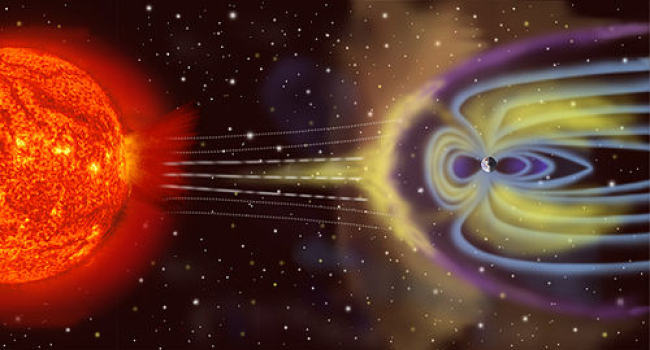
A new series of geomagnetic disturbances is expected to affect Earth over the upcoming weekend, April 18–19, caused by the influence of a coronal hole on the Sun. This was reported by specialists from the Laboratory of Solar Astronomy at the Space Research Institute of the Russian Academy of Sciences (IKI RAS) and the Institute of Solar-Terrestrial Physics of the Siberian Branch of the Russian Academy of Sciences.
What Is Happening on the Sun
A coronal hole is a region in the Sun’s corona with lower plasma density and temperature. Through such “holes,” solar wind escapes into space at increased speeds. When this stream reaches Earth, it causes disturbances in the geomagnetic field, which can manifest as magnetic storms of varying intensity.
At present, the Sun remains in a period of relatively low activity, often referred to as a “space calm.” Nevertheless, another coronal hole has already formed and is expected to influence Earth in the coming days.
What to Expect
According to the laboratory’s forecast, disturbances in Earth’s magnetic field will begin over the weekend of April 18–19. Scientists do not expect a powerful magnetic storm, but minor geomagnetic fluctuations are considered likely.
This information may be of particular interest to aurora enthusiasts: in high-latitude regions, favorable conditions could allow for weak to moderate auroral displays.
Context of Recent Events
It was previously reported that on April 10 of this month, the effects of a prior coronal hole were recorded, which may have caused weak magnetic storms. At the end of March, Earth experienced one of the strongest magnetic storms of the past decade—classified at the G3 level.
Solar activity is now gradually declining and approaching levels last seen in 2022.
In Brief
On April 18–19, Earth is expected to experience a series of geomagnetic disturbances caused by the influence of another coronal hole on the Sun. Scientists from IKI RAS and the Institute of Solar-Terrestrial Physics note that the storm is likely to be weak, though aurora watchers in high-latitude regions may observe faint glows in the sky. The Sun remains in a period of relatively low activity, and this is not the first such event recorded in April 2026.