make preferable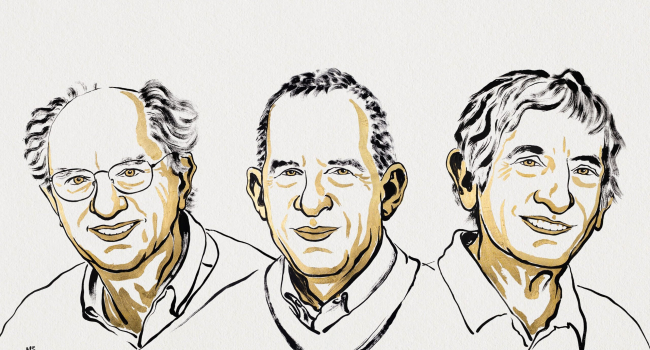
The 2025 Nobel Prize in Physics has been awarded to three American scientists — John Clarke, Michelle H. Devoret, and John M. Martinis — for their pioneering discoveries in macroscopic quantum tunneling and energy quantization in electrical circuits. The Nobel Committee announced the winners on October 7, 2025, recognizing their contributions as foundational to modern quantum technologies, including quantum computers and sensors, and highlighting how quantum mechanics operates even at the macroscopic scale.
What Is Quantum Tunneling and Why Does It Matter?
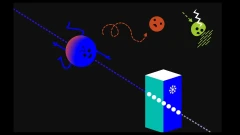
Quantum mechanics allows particles to pass through energy barriers in a process known as tunneling, where a particle effectively “slips” through an obstacle that classical physics deems impenetrable. Normally, this phenomenon occurs at the microscopic level, involving individual particles like electrons. However, the experiments conducted by Clarke, Devoret, and Martinis demonstrated that quantum effects can manifest on a macroscopic scale, involving billions of particles at once.
Their research revealed how energy becomes quantized in electrical circuits, leading to the creation of superconducting qubits — the building blocks of quantum computers. These discoveries, made during the 1980s and 1990s, resolved crucial challenges in superconductivity and quantum information science. Martinis, for example, explored superconducting systems where tunneling occurs across entire circuits, allowing for the development of stable quantum bits. Thanks to their work, today’s quantum technologies can tackle problems that classical computers cannot — from molecular modeling to complex optimization tasks.
The 2024 Prize: From Quantum Physics to Artificial Intelligence
Last year, in 2024, the Nobel Prize in Physics was awarded to John Hopfield and Geoffrey Hinton for fundamental discoveries in artificial intelligence and machine learning. Their research on associative neural networks laid the foundation for modern deep learning systems, revolutionizing AI. It was the first Nobel Prize directly tied to computational models inspired by the physics of the brain.
The Medicine Prize: Secrets of the Immune System
A day earlier, on October 6, 2025, the Nobel Prize in Physiology or Medicine went to Mary Brunkow, Fred Ramsdell, and Shimon Sakaguchi for uncovering the mechanism of peripheral immune tolerance — the process that prevents the immune system from attacking the body’s own cells. Their discoveries paved the way for new cancer and autoimmune disease therapies, including treatments for diabetes and rheumatoid arthritis.
In Short...
The 2025 Nobel Prize in Physics honors Clarke, Devoret, and Martinis for demonstrating macroscopic quantum tunneling, a breakthrough that paved the way for quantum computing. The 2024 prize celebrated Hopfield and Hinton, pioneers of AI and neural networks, while the 2025 Medicine Prize recognized Brunkow, Ramsdell, and Sakaguchi for their work on immune tolerance. Together, these awards highlight the growing intersection of physics, biology, and technology — and how fundamental science continues to reshape the future.