make preferable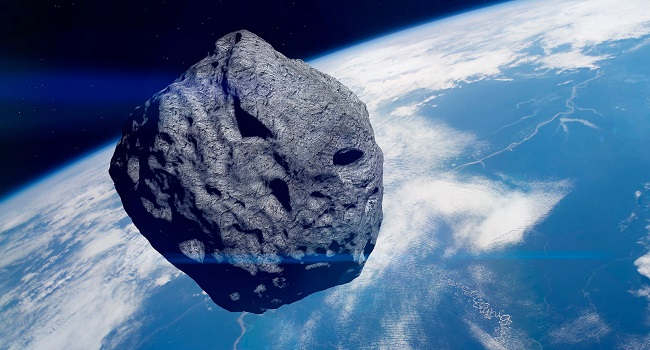
In 2024, asteroid 2024 PT5 briefly became a “mini-moon” of Earth, orbiting the planet for two months. Such events are rare but attract attention not only from scientists, but also from space entrepreneurs. Asteroids rich in valuable metals — platinum, cobalt, iron, and gold — could be worth trillions of dollars. A new study published on Space.com suggests that the next “mini-moon” could become a target for resource extraction, transforming both the economy and technology.
Why Are Asteroids a “Gold Mine”?
Most asteroids are located in the asteroid belt between Mars and Jupiter, about 150 million km from the Sun. They contain metals essential for producing smartphones, laptops, solar panels, and hydrogen fuel cells. According to NASA, the resources in the asteroid belt could be worth about $100 million for every person on Earth, and mining just the 10 richest asteroids could yield up to $1.5 trillion.
“Mini-moons” — asteroids temporarily captured by Earth’s gravity — are ideal for mining. They are much closer than the main asteroid belt, which reduces fuel and equipment costs. For instance, 2024 PT5, originating from the Arjuna family of asteroids, came within reach but left without completing a full orbit around Earth.
The Challenges of Asteroid Mining
Bringing asteroid samples back to Earth is already possible: NASA’s OSIRIS-REx and Japan’s Hayabusa2 missions returned grams of material. However, the cost — $10–150 million per gram — makes commercial mining impractical. The main challenges include:
- Distance: Traveling to the asteroid belt requires enormous resources.
- Extreme conditions: Harsh temperatures and radiation complicate missions.
- Rotation speed: Many asteroids spin rapidly, making landing difficult.
- Dust: Without an atmosphere, micrometeorites stir up dust clouds that can jam equipment.
“Sometimes they’re scorching hot, sometimes icy cold, and radiation makes missions even harder,” noted Mustafa Hassanalian, associate professor at the New Mexico Institute of Mining and Technology.
Solutions for “Mini-Moons”
“Mini-moons” like 2024 PT5 are more promising because of their proximity to Earth. Companies are working on technologies that avoid direct landings and instead capture the asteroids:
- TransAstra: Proposes using “concentrated sunlight” and a giant polyamide bag (like foil) to melt an icy asteroid, leaving behind metals. “This is the perfect size for mining,” said CEO Joel Sercel.
- Tethers Unlimited: Suggested deploying a net to catch an asteroid, slow its rotation, and tow it into Earth orbit for mining by small satellites. The project shut down due to lack of funding.
- Bionic approach: Hassanalian has proposed a “web-like” net inspired by insect traps.
These methods avoid the landing problem but depend on accurate detection. The Vera Rubin Observatory, equipped with the world’s largest digital camera, began operations in June 2025 and has already improved the search for mini-moons.
Who’s in the Race?
China controls 80–90% of rare earth exports, pushing the U.S. and other nations to seek alternatives. Asteroids are rich in copper (for turbines), nickel (for solar panels), and platinum (for hydrogen fuel cells). On Earth, most of these metals sank into the planet’s core, but asteroids preserved them near the surface.
The history of asteroid exploration began with NASA’s NEAR Shoemaker in 2001, which accidentally “landed” on asteroid Eros. Later came Hayabusa (2003) and Hayabusa2 (2014), which returned samples, followed by OSIRIS-REx (2016–2023), which delivered material from Bennu. China’s Tianwen-2 mission (2025) is set to return samples in 2027.
What’s Next?
In 2029, NASA will launch the Psyche mission to asteroid 16 Psyche, valued in the quadrillions of dollars due to its metal content. This could ignite a new space industry, but there are risks:
- Economic collapse: A flood of metals could crash global prices.
- Technical challenges: Scaling up requires billions in investment.
Companies like TransAstra are waiting for the next mini-moon, which could appear in a year or in a decade. “This isn’t a monthly opportunity. You have to be ready,” said Rob Hoyt of Tethers Unlimited.
In Short…
Mini-moons like 2024 PT5 open the door to asteroid mining, promising trillions in resources. Technologies from TransAstra and others are bringing this vision closer, though high costs and the rarity of such objects remain obstacles. NASA’s Psyche mission in 2029 could be the first step toward a space “gold rush,” reshaping the economy and technology. For now, asteroids remain a dream — one that inspires both scientists and science fiction.