make preferable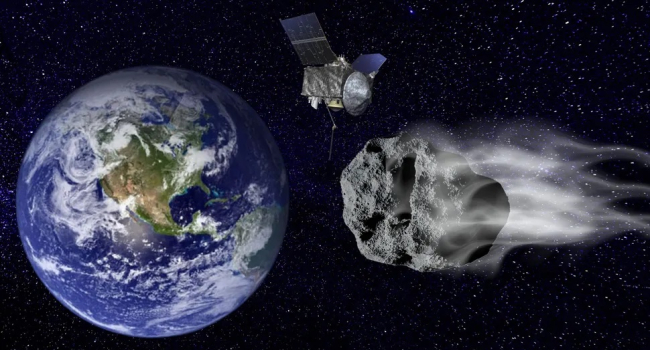
The asteroid Apophis, named after the ancient Egyptian god of chaos and darkness, is set to become the main astronomical event of 2029. On Friday, April 13, 2029, this object, measuring 340 meters in diameter, will pass just 31,600 km from Earth — closer than geostationary satellites. This rare phenomenon, which happens only once every 7,500 years, will be visible to the naked eye to about 2 billion people across Africa and Western Europe. Richard Binzel, a planetary science professor at MIT, told participants at the EPSC-DPS conference in Helsinki on September 8, 2025, that this would be four times more people than had watched Neil Armstrong’s landing on the Moon, describing the event as a truly global spectacle.
A Safe Flyby and Scientific Opportunities
Although Apophis is classified as “potentially hazardous,” scientists have confirmed that it poses no threat to Earth. Two decades of observations, including astrometry and radar measurements, have allowed researchers to calculate its orbit with great precision. Binzel emphasized that the probability of a collision had been ruled out for at least the next 100 years, and he repeated several times that Apophis would safely pass by Earth.
Thomas Statler of NASA described the flyby, which would take place at just 10% of the distance to the Moon, as a unique “natural experiment.” Researchers will be able to study how Earth’s gravitational field and magnetosphere affect the asteroid, which is crucial for understanding asteroid physics and advancing planetary defense technologies. Binzel noted that planetary defense should be seen as applied planetary science.
Space Missions to Apophis
Several missions are being prepared to study the asteroid:
- RAMSES (European Space Agency): Launch in 2028, with observations before, during, and after the flyby. The mission builds on technologies from Hera, following the success of NASA’s DART mission in 2022.
- DESTINY+ (Japan): Also scheduled for launch in 2028, with a focus on studying the asteroid’s properties.
- OSIRIS-APEX (NASA): Already en route after completing its mission to asteroid Bennu. The spacecraft is planned to spend 18 months examining Apophis’s surface and composition, though its future remains uncertain due to possible NASA budget cuts in 2026.
These missions are expected to provide valuable insights into the asteroid’s structure, rotation, and potential “astroseismic” effects triggered by Earth’s gravity, such as landslides or material ejections.
A Spectacle for Billions
On April 13, 2029, Apophis will appear in the night sky as a bright point of magnitude 3.1, comparable to the stars of the Big Dipper, moving across the sky at roughly the apparent width of the Moon per minute. It will be visible without telescopes in clear weather across the Eastern Hemisphere, particularly in Africa and Western Europe. For those wishing to track it precisely, applications like Sky Tonight will be useful.
Why It Matters
The flyby of Apophis is an exceptionally rare event, comparable in significance to some of history’s greatest astronomical observations. It will not only capture public attention but also provide scientists with invaluable data to:
- Test theories about asteroid behavior near planets.
- Develop methods of defending Earth against potential threats.
- Gain deeper understanding of asteroid composition, as they are relics of the Solar System’s formation 4.6 billion years ago.
Binzel jokingly described the event as a final exam scheduled for 2029, stressing that preparation must begin now.
In Brief…
Apophis, the so-called “God of Chaos,” will pass Earth on April 13, 2029. It poses no danger but promises a spectacular sight for 2 billion people. At the same time, it offers a unique opportunity for science and planetary defense, supported by missions such as RAMSES, DESTINY+, and OSIRIS-APEX. An event that happens only once in millennia will serve not only as an astronomical show but also as an important step in understanding space and safeguarding our planet.