make preferable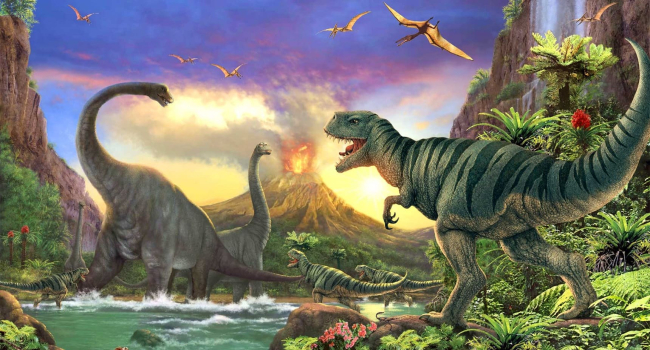
The mass extinction of dinosaurs 66 million years ago not only wiped out these giants but also radically reshaped the landscapes of our planet. Scientists from the University of Michigan have discovered that the disappearance of dinosaurs triggered a rapid expansion of forests, which in turn altered river channels and soil structures. The findings were published in Communications Earth & Environment (CE&E).
Dinosaurs as “Ecosystem Engineers”
Before the catastrophe caused by an asteroid impact at the boundary of the Cretaceous and Paleogene periods, dinosaurs acted as “ecosystem engineers.” They trampled vegetation, uprooted trees, and maintained open spaces with sparse grass cover. In such conditions, rivers flowed more freely, their channels remained straight, and floods were frequent. This created landscapes with swampy areas where silt and clay accumulated.
After the dinosaurs went extinct, everything changed. Without their influence, forests began to grow denser, and their roots stabilized soils, preventing erosion. This led to the formation of rivers with broad meanders — winding channels that flooded less often. In the geological record, these changes are reflected in a shift in sediments: instead of silt and clay, geologists found “striped” layers of sandstone typical of meandering rivers.
Evidence from the Past
A key piece of evidence was the discovery of a thin layer of clay rich in iridium — a rare element believed to have been delivered by the asteroid responsible for the dinosaurs’ extinction. This layer clearly separates rock strata containing dinosaur fossils from younger layers that show traces of the first mammals. At this exact point, there was a sharp transition in the type of river deposits, confirming the link between the disappearance of dinosaurs and landscape transformation.
“We’ve shown that life not only responds to climate and tectonic processes but can also reshape landscapes itself. Dinosaurs had a huge impact on ecosystems, and their extinction instantly transformed rivers and soils,” said the study’s lead author, paleontologist Luke Weaver.
Lessons for the Present
Scientists draw parallels between the ancient catastrophe and today’s changes caused by human activity. Mass species extinction, deforestation, and climate change now underway may also leave a visible mark in Earth’s geological history. Just like the disappearance of dinosaurs, these processes affect not only the biosphere but also physical landscapes — from river channels to soil structures.
Researchers emphasize that studying such events helps us understand how ecosystems respond to global shocks. This serves as a warning for humanity, which is accelerating environmental changes through its own actions.
What’s Next?
The new discovery encourages scientists to further explore the relationship between the biosphere and geological processes. In the future, they plan to:
- Analyze other regions to confirm the global nature of post-dinosaur changes.
- Study how forest expansion influenced the evolution of mammals.
- Compare ancient changes with modern anthropogenic processes to predict their long-term effects.
In Short…
The extinction of dinosaurs 66 million years ago was not just the end of an era of giants but also a turning point for Earth’s landscapes. Without their influence, forests reshaped rivers, making them winding, and stabilized soils against erosion. The University of Michigan’s discovery, reinforced by the iridium layer, highlights how strongly life itself shapes the planet. These lessons from the past remind us of the fragility of ecosystems and the profound impact humans have on Earth today.