make preferable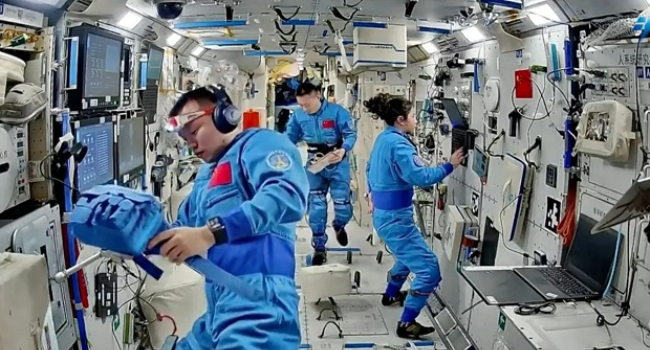
Chinese scientists from the China Astronaut Research and Training Center have developed an innovative solution to one of astronauts’ everyday problems—washing clothes. Their compact washing machine, which requires no detergents and uses minimal water, makes it ideal for space missions. The development was reported in the Chinese Journal of Space Science in September 2025.
Why is a washing machine needed in space?
Astronauts in space face numerous limitations, one of which is the inability to wash clothes. In microgravity, water is a valuable resource mainly reserved for drinking and hygiene, while dirty clothing becomes one of the largest consumables. Astronauts wear clothes until they start to smell, after which the garments are disposed of in cargo capsules that burn up upon re-entering Earth’s atmosphere. For example, on a 15-year orbital station mission, a three-person crew would need about 3,383 kg of clothing, significantly raising launch costs.
Chinese researchers proposed a solution: a compact washing machine that uses ultrasonic atomization to create an ultrafine water mist and ozone generated by ultraviolet light for disinfection. The device weighs just 12 kg, has a cubic shape slightly larger than carry-on luggage, and consumes only 400 ml of water per wash cycle, cleaning up to 800 g of clothing (about 5–6 items). This could reduce the clothing required for missions to the Tiangong station or future lunar and Martian bases by more than 60%.
How does the space washing machine work?
The device is designed for microgravity conditions, where conventional liquids and soapy water can cause problems such as droplet buildup or air contamination. The system works in a sealed chamber and includes three stages in a 30-minute wash cycle:
- Mist spraying: Fans distribute ultrafine water mist, created by ultrasonic atomization, evenly over the clothes. This cleans fabric without large amounts of water.
- Ozone disinfection: Ultraviolet lamps generate ozone, eliminating 99.9% of bacteria and odors. Clothes can then be reused up to five times.
- Drying and air purification: Hot air dries the clothes while breaking down ozone. Sensors monitor humidity and ozone levels, and filters capture any residual gas or droplets, preventing them from leaking into the station’s air.
Simulations have shown that the system distributes moisture evenly and achieves a high level of sterilization without releasing chemicals or water into the environment. The acrylic chamber, sensors, fans, and ozone lamps are designed to operate for five years without replacement of key components.
Why is this important?
Water in space is a scarce and costly resource. On the ISS and China’s Tiangong station, water is recycled from urine, sweat, and condensation, but its priority use remains drinking and hygiene. Traditional laundry is impossible due to water restrictions and the challenge of disposing of soapy water in microgravity. Sweat-soaked clothing from daily exercise—essential for astronaut health—becomes a major expendable.
The Chinese team’s development addresses these issues by offering:
- Resource efficiency: only 400 ml of water per cycle.
- Eco-friendliness: no detergents, which are difficult to recycle.
- Durability: designed for long missions (5+ months in orbit or 2.5 months in deep space).
- Cost savings: reducing the volume of clothing to be shipped from Earth lowers launch expenses.
Previous attempts and their limitations
Other teams have tried solving space laundry before:
- In 2017, Umpqua Research (USA) introduced a sealed drum using steam and microwave drying, but it was bulky, energy-intensive, and required a vacuum.
- In 2021, Tide tested special detergents and stain wipes on the ISS, but they did not provide full laundry capability.
- In 2023, Ultrasonic proposed vibration-based cleaning with minimal water, but their method did not remove bacteria.
The Chinese design stands out for its compactness, energy efficiency, and full sterilization without chemicals, making it more promising for long-duration missions.
Prospects and next steps
Researchers plan to:
- Build a working prototype of the device.
- Increase the machine’s capacity for larger laundry loads.
- Further reduce water consumption, critical for missions with limited supplies.
These improvements will make the system even more suitable for future expeditions to the Moon and Mars, where autonomy and resource efficiency are key.
In short…
China’s space washing machine is a breakthrough in solving one of astronauts’ everyday challenges. The compact 12 kg device, using 400 ml of water and ozone for sterilization, could cut clothing requirements for space missions by more than 60%. This not only saves resources but also makes long-term flights, such as missions to the Moon or Mars, more realistic. The next step is building a prototype and optimizing the system further, bringing humanity closer to sustainable living in space.