make preferable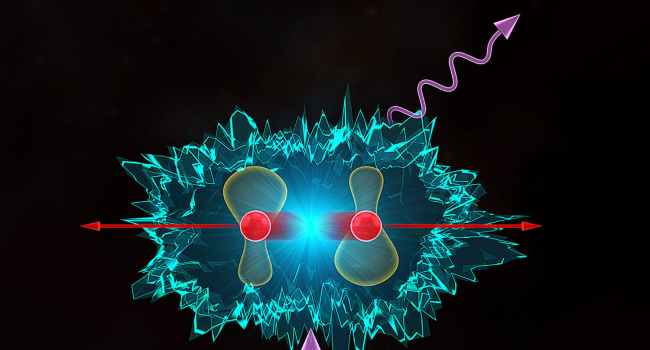
An international team of scientists from the Jefferson Lab Hall A Tritium Collaboration has announced a major breakthrough in understanding the internal structure of nucleons — protons and neutrons, which make up atomic nuclei. The results of the study, published in Physical Review Letters (PRL), open new horizons in subatomic physics.
What are nucleons?
Protons and neutrons, known as nucleons, are the fundamental building blocks of atomic nuclei. They consist of three basic quarks (up and down), bound together by gluons — the particles that carry the strong force. However, inside nucleons there are also dynamic processes: pairs of quarks and antiquarks are constantly emerging and disappearing, which complicates the understanding of how momentum and spin are distributed among all these components. Until now, scientists have not been able to precisely describe how these elements interact inside nucleons.
The MARATHON experiment: a unique approach
The centerpiece of the study was the MARATHON experiment, conducted at Jefferson Lab. Scientists used a rare and challenging target — radioactive gaseous tritium (a hydrogen isotope with two neutrons). Working with tritium requires strict safety measures due to its radioactivity, making such experiments both unique and difficult to perform.
Physicists bombarded targets made of tritium, helium-3, and deuterium with an electron beam of 11 GeV, recording their inelastic scattering. Two advanced magnetic spectrometers, installed in Jefferson Lab’s Hall A, were used for analysis. This setup allowed researchers to collect highly precise data on the internal structure of nuclei.
Discoveries: mirror nuclei and the EMC effect
The study produced several important findings:
- Scientists obtained unique data on the structure of tritium and helium-3, the so-called mirror nuclei, where the number of protons in one nucleus equals the number of neutrons in the other. This made it possible to compare the behavior of nucleons in different nuclear environments.
- For the first time, the EMC effect for tritium was measured. This phenomenon shows that the structure of nucleons inside a nucleus differs from that of free nucleons, due to nuclear interactions. Data on the EMC effect in tritium are extremely rare and may refine models of nuclear physics.
Importance for science
The data will help improve models of quantum chromodynamics — the theory describing strong interactions between quarks and gluons. They also shed light on the nature of interactions between nucleons in light nuclei such as tritium and helium-3. According to Max Petratos, one of the experiment’s leaders, these results are unique: “Working with tritium is extremely difficult and dangerous. These data are likely never to be collected again, but they will be key to understanding subatomic physics.”
In summary
The MARATHON experiment has become an important step in studying the internal structure of nucleons. The unique data obtained with tritium refine our knowledge of how momentum and spin are distributed within protons and neutrons, as well as of nuclear interactions. These results not only confirm theoretical models of quantum chromodynamics but also open new opportunities for research on light nuclei. Considering the challenges of working with tritium, this discovery may remain one of a kind, highlighting its significance for future theoretical and experimental work in physics.