make preferable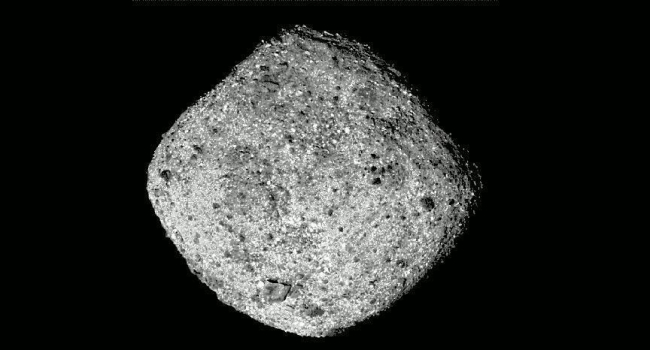
Asteroid Bennu, samples of which were delivered to Earth in 2023 by NASA’s OSIRIS-REx probe, has turned out to be a unique storage of information about the origin of the Solar System. Research has shown that it contains the most ancient matter not only from our star system but also from interstellar space. Scientists discovered traces of stardust that formed before the birth of the Sun, as well as organic compounds with unusual isotopic composition. The results of the study were published in Nature Astronomy on August 24, 2025.
What Does Bennu Hide?
Analysis of samples collected by OSIRIS-REx revealed that Bennu’s “parent” body contained a large amount of ice, which in the past melted and reacted with minerals. This led to the formation of compounds produced through interactions between water and solid rock at temperatures of about 25°C. Such conditions suggest that chemical processes crucial for the emergence of prebiotic chemistry — linked to the origin of life — could have been taking place inside the asteroid for billions of years.
On the surface grains of Bennu, scientists also found traces of space weathering: microscopic craters and splashes of molten rock caused by micrometeorite impacts and exposure to the solar wind. This indicates that the asteroid underwent constant changes both internally (through chemical reactions) and externally (due to environmental influences).
Stardust and Interstellar Organics
One of the most astonishing discoveries was the presence of stardust in Bennu’s samples, formed even before the Sun appeared around 4.6 billion years ago. In addition, scientists identified organic molecules with an unusual isotopic composition that likely originated in the interstellar medium — the cloud of gas and dust from which the Solar System formed. These findings make Bennu a true “time capsule,” preserving traces of processes that occurred at the dawn of our stellar system.
Why Is Bennu Unique?
Unlike meteorites, which undergo heating and chemical changes when passing through Earth’s atmosphere, Bennu’s samples delivered by OSIRIS-REx preserved their pristine nature. This makes them an invaluable source of information on the formation and evolution of the Solar System.
“Scientists noted that comparing such samples with meteorites that fell to Earth is difficult, since the latter undergo alteration when passing through the atmosphere. This means that direct sample-return missions like OSIRIS-REx provide the ‘cleanest’ understanding of how the Solar System formed and evolved,” the study stated.
Significance for Science
Discoveries related to Bennu carry several key implications:
- Chemistry of life: The presence of water and organic compounds confirms that asteroids like Bennu may have played a role in delivering the building blocks of life to early Earth.
- History of the Solar System: Stardust and interstellar organics point to a link between the Solar System and the wider galactic environment.
- Future missions: The success of OSIRIS-REx highlights the importance of sample-return missions, such as the upcoming mission to asteroid Apophis or Japan’s Hayabusa2, which delivered material from asteroid Ryugu.
In Brief…
Asteroid Bennu turned out to be a genuine “time capsule,” preserving traces of stardust, interstellar organics, and chemical processes that took place billions of years ago. Samples delivered by the OSIRIS-REx probe showed that water once existed on the asteroid, along with conditions suitable for prebiotic chemistry. Signs of space weathering and its unique composition make Bennu a key to understanding the formation of the Solar System. The study, published in Nature Astronomy, emphasizes the value of sample-return missions and opens new horizons for exploring the origins of life and the evolution of our stellar system.