make preferable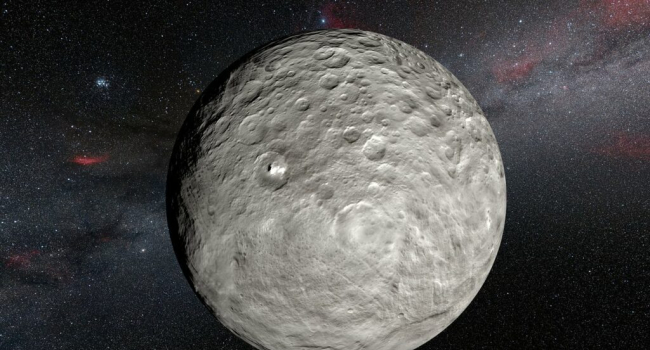
An international team of scientists has discovered that the dwarf planet Ceres, the largest object in the asteroid belt between Mars and Jupiter, may once have had all the conditions necessary for life to emerge. The study, published in Science Advances on August 21, 2025, shows that billions of years ago, Ceres had a source of chemical energy capable of supporting microbial organisms. This finding expands the list of potentially habitable objects in the Solar System.
Ceres: A Window of Habitability in the Past
Ceres, with a diameter of about 950 km, was long considered a cold and lifeless world. However, data from NASA’s Dawn mission, which ended in 2018, revealed the presence of salts, organic molecules, and evidence of a subsurface salty ocean. The new study added a crucial element — chemical energy, necessary for sustaining life.
“On Earth, hot water from the interior mixing with the ocean creates a real feast for microbes. That’s why it is important to understand whether something similar happened on Ceres,” said lead author Sam Courville of the University of Arizona.
Scientists modeled the evolution of Ceres and found that between 2.5 and 4 billion years ago, its interior generated heat from the decay of radioactive elements. This heat sustained circulation of hot water, enriched with methane and carbon dioxide rising from the rocky core. Such conditions could have served as “fuel” for microbial metabolisms similar to those in hydrothermal vents on Earth.
Today, Ceres has lost its internal heat sources, its subsurface ocean is almost entirely frozen, and the remaining liquid has turned into concentrated brine. But in the past, it went through a “window of habitability” — a period when life could theoretically have arisen.
How Did It Work?
The evolutionary model of Ceres showed that about 2.5 billion years ago, hot water from the planet’s interior rose to the subsurface ocean, mixing with cold water and creating a chemically active environment. This process resembled Earth’s hydrothermal systems, where microbes use chemical energy instead of sunlight. Methane and carbon dioxide released from the core rocks could have served as energy sources for hypothetical microorganisms.
“We’re not claiming there was life on Ceres, but the conditions for its origin may have existed,” Courville emphasized.
Other Candidates for Habitability
The discovery is significant not just for Ceres. Scientists believe that similar processes may have occurred on other icy bodies of comparable size in the Solar System — such as large asteroids or dwarf planets — where there is no tidal heating like on Jupiter’s moon Europa or Saturn’s moon Enceladus.
“If Ceres was once habitable, then it’s likely that dozens of asteroids and moons were also habitable in the past. And if they’re kept warm, perhaps [they] may still be habitable today,” said planetary scientist Joe O’Rourke of the University of Arizona.
Such objects may include:
- Large asteroids in the belt, where subsurface reservoirs and chemical energy could have existed.
- Dwarf planets such as Pluto or Eris, which are believed to have subsurface oceans.
- Icy moons that lack strong tidal heating but retain warmth from radioactive decay.
Why Does It Matter?
The study reshapes our view of habitability in the Solar System. If even Ceres, located in its inner regions, could have had life-friendly conditions, the number of potentially habitable objects increases significantly. This opens new prospects for the search for signs of life on icy bodies that don’t depend on tidal forces from giant planets.
“Habitability may simply be the natural consequence of combining the right ingredients, which appear to be common across the Solar System,” Courville concluded.
However, there is still no direct evidence of life on Ceres. To find it, a mission would be required to drill through its icy crust or closely study the minerals brought to the surface by cryovolcanism.
In Brief…
The dwarf planet Ceres, located in the asteroid belt, may have been habitable 2.5–4 billion years ago thanks to a subsurface ocean, organic molecules, and chemical energy from radioactive decay. The study, published in Science Advances, suggests that similar conditions may have existed on other icy bodies in the Solar System, expanding the list of habitability candidates. Though today Ceres is a frozen world, its past raises new questions about where else in our system life could have begun.