make preferable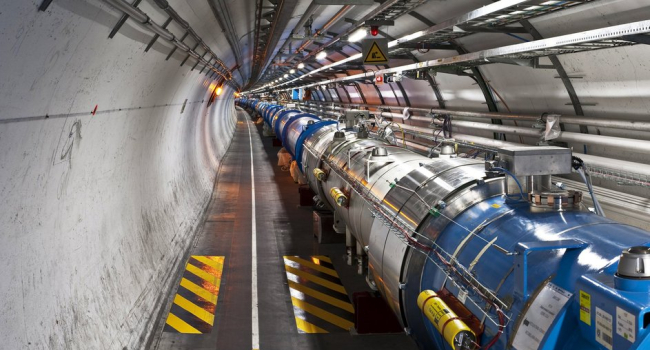
Scientists from the LHCb collaboration, working at the Large Hadron Collider (LHC) at CERN, have observed for the first time an extremely rare decay of the sigma-plus baryon (Σ⁺) into a proton and a pair of oppositely charged muons. This event has become the rarest baryon decay ever recorded. The results of the study were published in Physical Review Letters (PRL) on August 19, 2025.
What are baryons and why is this important?
Baryons are particles composed of three quarks bound together by the strong nuclear force. They form the basis of visible matter in the Universe, including protons and neutrons that make up atomic nuclei. Studying rare baryon decays, such as Σ⁺, can shed light on physical processes beyond the Standard Model — the prevailing theory that describes fundamental particles and their interactions.
Rare decays attract scientists’ attention because they may hint at the existence of unknown particles or forces not accounted for in the current theory. Such discoveries are key to understanding the mysteries of the Universe, including baryon asymmetry — the predominance of matter over antimatter.
Historical background: the HyperCP experiment
Interest in the Σ⁺ decay into a proton and a muon pair (a muon and an antimuon) dates back to 2005, when the HyperCP experiment at Fermilab (USA) detected three such decay events. Strikingly, the muon pairs in all three cases had the same mass, sparking a hypothesis about the possible existence of an unknown intermediate particle involved in the process.
“We analyzed data collected between 2016 and 2018 during proton-proton collisions. During this time, the experiment produced about a hundred trillion Σ baryons, among which we searched for traces of the rare decay,” explained Gabriele Martelli from the National Institute for Nuclear Physics in Perugia.
However, the limited data made it difficult to confirm the nature of these events in HyperCP. The new LHCb experiment marked a breakthrough, enabling the collection of much larger statistics.
The uniqueness of the Σ⁺ decay
The sigma-plus baryon (Σ⁺), composed of two up quarks (u) and one strange quark (s), has a relatively long “lifetime” — long enough to travel several centimeters away from the proton collision point in the collider. This facilitates detection but also introduces a challenge: other particles can produce false signals that mimic the decay being sought.
To eliminate background noise, physicists employed machine learning algorithms, which filtered out random particle combinations and isolated genuine decay events. As a result, scientists recorded hundreds of cases of Σ⁺ decaying into a proton, a muon, and an antimuon — the rarest baryon decay ever observed.
What did the results show?
Analysis of the data showed that the probability and characteristics of the Σ⁺ decay align with predictions of the Standard Model, ruling out the anomalies suggested by the HyperCP experiment. This means that the hypothesis of an unknown intermediate particle has not yet been confirmed.
“Now we can compare the probability and properties of this process with the predictions of the Standard Model,” explained Professor Francesco Dettori of the University of Cagliari. “Historically, it was precisely rare decays that led to the discovery of new particles long before accelerators could create them directly.”
Still, the absence of deviations from the Standard Model does not diminish the importance of the discovery. It confirms the remarkable accuracy of theoretical predictions and paves the way for future research.
Next step: CP violation and baryon asymmetry
The LHCb collaboration now plans to focus on studying CP violation — the differences in behavior between particles and antiparticles. This phenomenon may explain why matter dominates in the Universe while antimatter is virtually absent, even though both should have formed in equal amounts after the Big Bang.
The rare Σ⁺ decay provides a unique opportunity for such investigations. If future studies reveal deviations from Standard Model predictions, they may point to new physical phenomena that could help unravel the mystery of baryon asymmetry.
In short…
The discovery by the LHCb collaboration is a historic breakthrough in particle physics. For the first time, scientists have observed the ultra-rare decay of the sigma-plus baryon (Σ⁺) into a proton and a muon pair, made possible by analyzing proton-proton collision data from 2016–2018 and applying machine learning techniques. Although the results are consistent with the Standard Model, they open new perspectives for studying CP violation and searching for physics beyond the current theory. This achievement highlights the power of the Large Hadron Collider and the importance of rare processes in uncovering the secrets of the Universe.