make preferable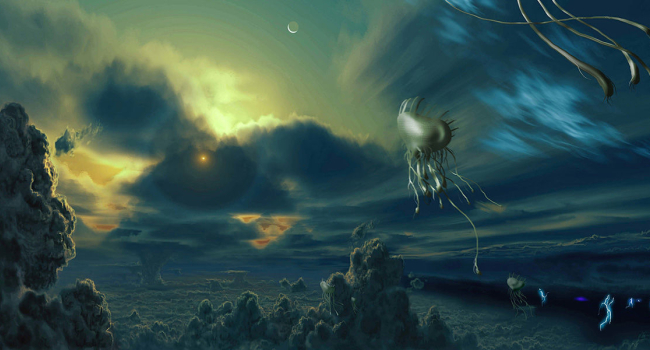
A new study challenges long-held assumptions about what is required for life to exist in the universe. Scientists at the Massachusetts Institute of Technology (MIT) have discovered that ionic liquids — salts that remain liquid at temperatures below the boiling point of water — may serve as a suitable medium for life on other planets and moons. This breakthrough, published on August 11, 2025, in the Proceedings of the National Academy of Sciences, significantly expands the potential habitable zone of rocky worlds and calls for a reevaluation of criteria in the search for extraterrestrial life.
Water Is Not the Only Key to Life
On Earth, liquid water is considered a prerequisite for life because it provides the medium for metabolism and biochemical processes. However, research led by MIT postdoctoral fellow Rashana Agrawal shows that other liquids may play the same role.
We think of water as essential for life because Earth’s organisms require it. But if we take a broader perspective, life only requires a liquid environment where metabolism is possible, Agrawal noted.
The team studied ionic liquids — salts that remain liquid below 100 °C and are stable across a wide range of pressures. Laboratory experiments revealed that these liquids can:
- Form from substances found on rocky planets and moons, such as sulfuric acid and organic compounds.
- Support biomolecules, including proteins essential for life.
- Persist in environments where water would freeze or evaporate, such as on cold planets or hot worlds like Venus.
This discovery dramatically increases the habitable zone for all rocky worlds, Agrawal emphasized.
An Unexpected Discovery
The research began as an attempt to study possible signs of life on Venus, where scientists were investigating how sulfuric acid evaporates from the planet’s clouds. During experiments, researchers noticed that a liquid layer always remained after evaporation. Analysis revealed that it was an ionic liquid, formed from the reaction of sulfuric acid with glycine — an amino acid known to exist in space, for example on asteroids.
This led us to think: sulfuric acid exists on Earth in volcanic emissions, while organic compounds are found on asteroids and other bodies. Perhaps ionic liquids can form naturally on exoplanets, Agrawal explained.
Implications for the Search for Extraterrestrial Life
The discovery reshapes the way scientists approach the search for life in the universe:
- Expanding the habitable zone: Ionic liquids remain stable where water cannot exist, making planets and moons with extreme temperatures or pressures — such as Venus, Mars, or Jupiter’s and Saturn’s moons — potentially habitable.
- New mission targets: Telescopes like the James Webb Space Telescope and upcoming missions may search for traces of ionic liquids in exoplanet atmospheres.
- Revised criteria: Habitability models will need to account not just for water but for other liquids capable of sustaining biochemistry.
We’ve opened Pandora’s box for new research, said study co-author, MIT professor Sara Seager. The team now plans to investigate what biomolecules and processes can function in ionic liquids and test them under conditions simulating other planets.
Context and Future Directions
This discovery aligns with other studies that broaden the concept of habitability. For example, scientists have already suggested that subsurface oceans on Europa (a moon of Jupiter) or Enceladus (a moon of Saturn) might host life. Ionic liquids add another scenario — one in which life is possible even without water. This is especially relevant for planets orbiting red dwarfs, where extreme conditions often prevent liquid water but may still allow ionic liquids to exist.
Future research will focus on:
- Analyzing the chemical composition of ionic liquids under cosmic conditions.
- Developing tools to detect such liquids on exoplanets.
- Studying biochemical processes that could occur in these environments.
In Brief…
The MIT study, published on August 11, 2025, showed that ionic liquids could be an alternative to water for supporting life on other planets. These liquids, stable under extreme conditions, can form from substances common in space and sustain biomolecules. The discovery extends the habitable zone to worlds once considered uninhabitable and opens new directions in the search for extraterrestrial life. Scientists call it “a true journey” that may change our understanding of life in the universe.