make preferable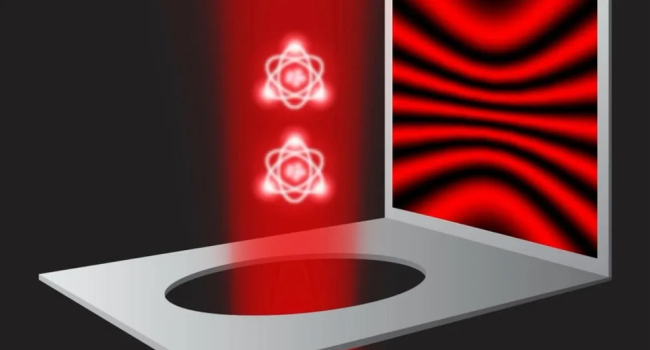
For over a century, quantum physics has taught us that light has a dual nature — it is both a wave and a particle. Scientists from the Massachusetts Institute of Technology (MIT) have conducted a groundbreaking experiment with single atoms that has definitively confirmed: light cannot exhibit both wave and particle properties simultaneously. This research, published on July 22, 2025, in the journal Physical Review Letters, puts an end to the debate between Albert Einstein and Niels Bohr about the nature of light.
The Dual Nature of Light: Origins of the Debate
As reported by Space.com, debates about whether light is a wave or a particle began as early as the 17th century. Isaac Newton believed that light was a stream of particles, which explained the sharpness of mirror reflections and the inability to see around corners. At the same time, Christiaan Huygens claimed that light behaved like a wave, demonstrating diffraction and refraction.
In 1801, Thomas Young conducted the famous double-slit experiment. He directed coherent light through two narrow slits onto a screen, and instead of two bright spots expected for particles, he saw alternating bands of light and shadow — an interference pattern characteristic of waves. This proved that light propagates like a wave, interacting with itself.
In the early 20th century, Max Planck showed that light is emitted in quanta of energy, and Albert Einstein called these quanta photons — particles of light. Quantum physics united both ideas by introducing the concept of wave-particle duality: light possesses both wave-like and particle-like properties. However, Heisenberg’s uncertainty principle states that these properties cannot be observed simultaneously.
Einstein vs. Bohr
Niels Bohr, one of the founders of quantum mechanics, introduced the concept of complementarity: mutually exclusive properties of a quantum system, such as the wave and particle nature of light, cannot be measured at the same time. Einstein, who rejected the randomness of quantum mechanics, tried to disprove this by referring to the double-slit experiment. He proposed that when a photon passes through a slit, the walls of the slit should experience a slight disturbance — a “rustle” from the particle. This would allow light to be measured as a particle (by the “rustle”) and as a wave (through interference).
Bohr disagreed: according to the uncertainty principle, measuring the “rustle” (i.e., the photon’s momentum) would destroy the wave pattern, leaving only two bright spots on the screen. Decades of experiments confirmed Bohr’s position, but the bulky equipment involved raised doubts — what if the devices themselves distorted the results?
MIT’s New Experiment
The MIT team, led by physicists Wolfgang Ketterle and Vitaly Fedoseev, simplified the experiment to the atomic scale. Using lasers, they arranged 10,000 single atoms cooled to fractions of a degree above absolute zero. Each atom acted as a “slit”: photons scattered off the atoms, creating an interference pattern similar to the double-slit experiment.
The researchers measured how photons “rustled” the atoms, capturing their particle-like nature. The more accurately this “rustle” was measured, the weaker the interference pattern became, confirming Bohr’s complementarity. The lasers holding the atoms were switched off a millionth of a second before measurement to eliminate their influence. The result remained unchanged: wave and particle properties of light cannot be observed simultaneously.
The Crucial Role of “Quantum Fuzziness”
The decisive factor turned out to be “quantum fuzziness” — the uncertainty in the position of atoms, dictated by the uncertainty principle. The weaker the lasers held the atoms, the greater this fuzziness became, allowing the detection of the photons’ “rustle” as particles, but destroying the wave interference. This proved that the limitation is not due to the equipment, but to the fundamental laws of quantum mechanics.
Einstein and Bohr could not have imagined that such an experiment would be possible with individual atoms and photons, Ketterle said.
What Does This Mean?
The MIT experiment confirms the strangeness of quantum physics: light truly has a dual nature, but we cannot observe it as both a wave and a particle at the same time. The universe, it seems, does “play dice,” as Einstein would have put it, and the properties we observe are only statistical results of the interaction of many particles. This research strengthens the foundations of quantum theory and opens the way for new atomic-level experiments that may bring us closer to understanding the quantum world.