make preferable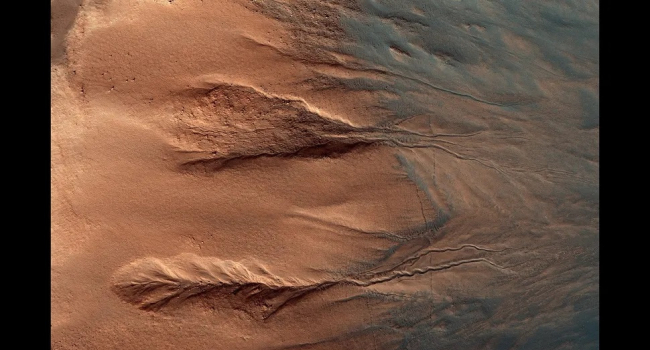
Studies of dunes and other geological formations on Earth and Mars offer scientists valuable insight into the conditions that shaped them. Lauren Berger, a graduate student at Texas A&M University, shares her experience working in the Algodones Desert and explains its significance for Martian research.
Expedition to Algodones
In November 2022, Lauren Berger and her advisor, geology professor Ryan Ewing, embarked on a research trip to the Algodones Dunes, located at the intersection of California, Arizona, and Mexico. Equipped with GPS, drones, notebooks, sample bags, and tools—including a small shovel affectionately named “scoopa”—the team studied wind-formed sand ripples, or aeolian features, which appear not only on Earth but also on Mars, Venus, Pluto, Saturn’s and Neptune’s moons, and comet 67P.
In Algodones, the researchers measured the height and spacing of coarse-grained sand ripples and used drones to capture high-resolution images for further analysis in the lab. The trip also offered a practical desert lesson: never forget your shovel. When their truck got stuck in the sand, only a passing buggy driver’s assistance saved them—and got them back to Yuma in time for dinner.
The Mars Connection
Berger’s interest in aeolian landscapes began during an internship at NASA’s Jet Propulsion Laboratory, where she spent two years analyzing Martian surface images and mapping sand ripples in areas where the Perseverance rover might land. Her task was to identify potentially hazardous zones where the rover could get trapped in sand. But over time, the ripple patterns themselves sparked her scientific curiosity.
Now a graduate student and aspiring planetary geologist, Berger studies compound dunes—formations where smaller dunes sit atop larger ones. She compares drone data from Algodones with imagery from the Mars Reconnaissance Orbiter’s cameras, analyzing the height, shape, and spacing of dunes on both planets. These comparisons help scientists infer wind patterns, grain sizes, and key features of the Martian atmosphere.
Why It Matters
Berger is building the first database of compound dunes on Mars, a crucial step in planning future crewed missions to the Red Planet. Martian dust storms are frequent—some can envelop the entire planet. Understanding aeolian features will help identify safe sites for constructing bases that won’t be buried in drifting sand.
The Mysteries of Martian Dunes
Berger’s work raises important questions: How widespread are compound dunes on Mars? Where do they form? How do they compare to their Earthly counterparts? These answers will form the core of her dissertation. Meanwhile, the dunes of California’s Algodones Desert continue to offer vital clues to unlocking the secrets of Mars’s shifting sands.