make preferable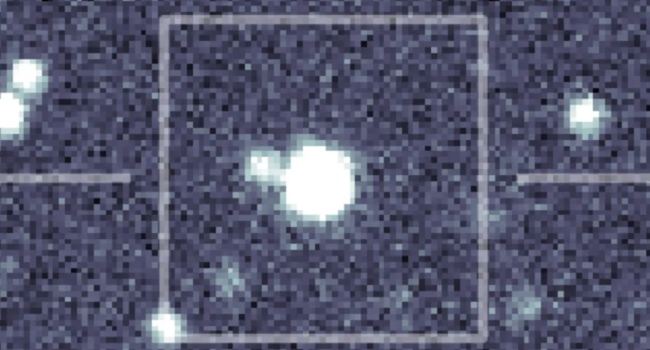
Astronomers, in collaboration with amateur enthusiasts from the Kilonova Seekers project, have discovered a rare exploding star — a cataclysmic variable known as GOTO0650. This object, found in the late stage of its evolution, turned out to be a binary system where a white dwarf is actively accreting material from a companion star. The discovery, published on July 1, 2025, in the journal Astronomy & Astrophysics, marks the first major achievement of the Kilonova Seekers project and demonstrates the power of citizen science. Here's how amateur astronomers helped uncover a unique star — and why it matters.
What Is GOTO0650?
GOTO0650 was found through a kind of “cosmic slide puzzle,” where volunteers compared images of the same patch of sky to identify changes in brightness. The area where the star was located suddenly brightened by a factor of 2,500 in just a few days. The quick response from amateur astronomers allowed the object to be classified as a cataclysmic variable — a binary system consisting of a white dwarf (a dense stellar remnant) and a companion star.
In such systems, the white dwarf pulls material from its companion, forming an accretion disk — a flat cloud of gas surrounding the dwarf. When the material in the disk reaches critical density and temperature, it triggers a sudden outburst in brightness, which then fades, returning the system to a quiescent state. Over time, this buildup can lead to a nuclear explosion that destroys the white dwarf — an event historically known as a “nova” (from the Latin for “new”), although it is not the birth of a star but rather a destructive process.
How Was GOTO0650 Found?
The discovery occurred within the Kilonova Seekers project, which invites the public to help search for cosmic events by analyzing images from GOTO (Gravitational-wave Optical Transient Observer) telescopes based in Spain and Australia. Volunteers spotted GOTO0650’s sudden brightness surge just 3.5 hours after the image was taken.
“Public participation in Kilonova Seekers is a unique opportunity for anyone to engage in real-time astrophysics,” said Tom Killestein, one of the project leads from the University of Warwick in the UK. “Without the efforts of volunteers, this discovery might have been lost among countless other objects.”
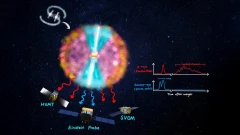
The swift response allowed scientists to collect a complete dataset on GOTO0650 before it faded. Follow-up observations were made with the Swift space telescope, the Einstein Probe, and amateur telescopes, which provided high-quality images that became a key part of the research.
Why Is GOTO0650 Unique?
X-ray and ultraviolet data revealed that GOTO0650 is a rare type of cataclysmic variable in the "period bouncer" phase. At this stage, the companion star has lost so much mass that the binary’s orbital period begins to increase, and the two stars start drifting farther apart. This is one of the two possible final stages in the evolution of cataclysmic variables — and objects in this phase are extremely rare.
“I literally screamed with joy when I found out I’d be a co-author on a scientific paper,” said project volunteer Svetoslav Alexandrov. “I knew I had co-discovered something meaningful — and that was the most important thing!”
The Significance of the Discovery
The discovery of GOTO0650 is important for several reasons:
- Rarity: Cataclysmic variables in the period bouncer stage are exceedingly rare, making GOTO0650 a valuable object for studying stellar evolution.
- Citizen Science: The success of Kilonova Seekers proves that amateur astronomers can make significant contributions to astrophysics and accelerate discoveries.
- Understanding the Cosmos: Cataclysmic variables offer insights into accretion processes, nuclear explosions, and the evolution of binary systems — all of which relate to broader cosmic phenomena like supernovae.
What’s Next?
The discovery of GOTO0650 is only the beginning. The Kilonova Seekers project continues to engage volunteers in analyzing data from GOTO telescopes to find other rare cosmic events, including kilonovae — explosions caused by the merger of neutron stars or black holes. Scientists also plan to use data from new observatories, such as the Vera Rubin Observatory, to uncover more cataclysmic variables.
For astronomy enthusiasts, this is a great chance to join the project through the Kilonova Seekers website and contribute to science. All it takes is comparing sky images and flagging brightness changes — and you might become a co-author of the next discovery.
In Summary…
The discovery of the cataclysmic variable star GOTO0650 by amateur astronomers through the Kilonova Seekers project is a triumph of citizen science. This rare period-bouncer star, feeding off its companion, was spotted thanks to volunteers who noticed its dramatic flare-up in the Tarantula Nebula. Rapid follow-up with GOTO, Swift, and amateur telescopes enabled a full scientific study before the star faded. The finding highlights the value of cataclysmic variables in understanding stellar evolution — and shows that anyone can be part of uncovering the universe’s mysteries.