make preferable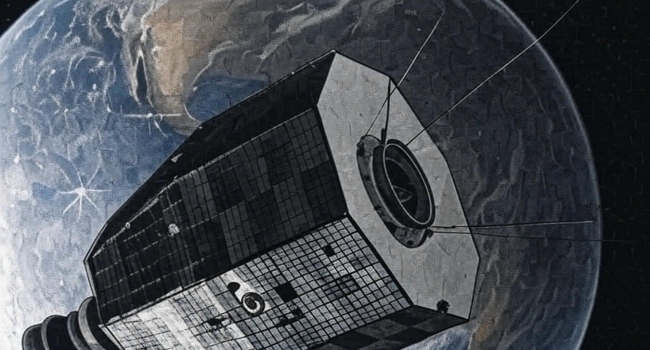
Australian astronomers have made a surprising discovery after detecting a powerful radio signal that was initially believed to be of cosmic origin. However, further analysis revealed the source to be a long-defunct NASA satellite. The study has been published on the preprint platform arXiv.
The Mysterious Radio Burst
In the summer of 2024, the Australian Square Kilometre Array Pathfinder (ASKAP) radio telescope detected an unusually strong radio pulse lasting less than 30 nanoseconds. Initially, scientists classified it as a Fast Radio Burst (FRB) — a rare and enigmatic phenomenon usually associated with distant galaxies. These bursts are often linked to neutron stars or black holes, although their true nature remains debated.
However, further analysis revealed that the signal did not come from deep space but rather from Earth’s orbit.
Relay 2: A Voice from the Past
Researchers traced the source of the burst to Relay 2, a NASA satellite launched in 1964 to relay television and telephone signals. The satellite completed its mission in 1967 and has since been considered “dead,” showing no signs of activity for decades. Scientists proposed two main hypotheses to explain the unexpected signal:
- Electrostatic charge buildup: Over decades in orbit, the satellite may have accumulated a charge that was suddenly released as a powerful radio pulse.
- Micrometeoroid impact: A collision with a tiny space object could have created a plasma cloud, generating the burst.
Implications for Astronomy
The discovery highlights the importance of careful signal filtering in space research. Bursts initially mistaken for extragalactic phenomena may in fact have terrestrial or near-Earth origins, requiring stricter data analysis. It also demonstrates that even long-defunct satellites can unexpectedly “speak,” potentially interfering with modern observations.
Prospects for Space Debris Monitoring
The Relay 2 signal opens new possibilities for tracking space debris. Scientists suggest that similar bursts may be used to detect and monitor defunct satellites and debris in Earth's orbit. This is especially relevant given the presence of more than 27,000 tracked objects in orbit — including inactive satellites and rocket fragments.
Developing analysis methods for such signals could lead to early-warning systems for potential collisions, improving safety for current and future space missions.
Conclusion
The unexpected radio signal from Relay 2, a satellite launched over half a century ago, is a reminder that space still holds many mysteries — even close to Earth. This discovery by Australian astronomers not only underscores the complexity of interpreting cosmic signals but also offers new prospects for space debris detection and orbital safety. It shows that even “dead” technologies from the past can contribute to the science of the future.